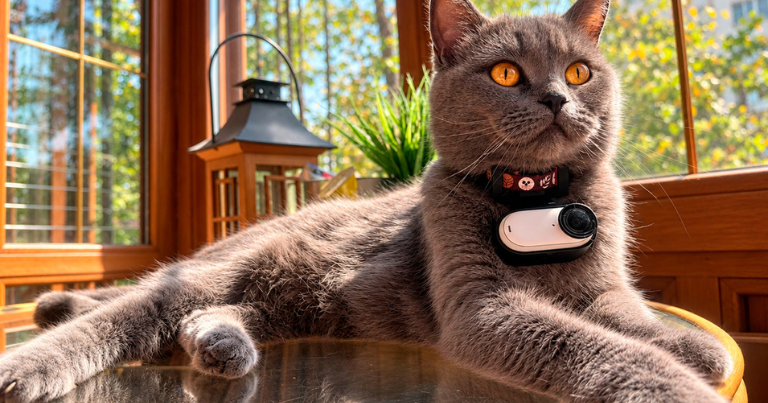
Some of the recruits explore every corner of the courtyard. Others find a sunny spot, groom their paws and stay there. When your search party consists of domestic cats, there is only so much you can ask of them.
For the team behind GdeKotBot, an AI-powered missing-pet search service in Kazakhstan, that unpredictability is part of the arrangement. Their “cat detectives” wear small cameras during their usual outdoor rounds. Once they return home, AI scans the footage for other cats and compares the images with missing-pet reports. A neighbourhood encounter that would otherwise go unnoticed can become a possible lead for an owner.
The idea grew out of the camera-equipped cats already attracting millions of views online. GdeKotBot’s team saw an opportunity to put that footage to use, while giving people a reason to notice and join an existing search network. Alexey Leybovich is candid about the campaign’s limits: the cats themselves will only cover so much ground. Its wider success depends on the people who hear about it and decide to help.
We spoke with Leybovich about uncooperative camera operators, the limits of AI recognition and what it takes to turn an entertaining idea into participation.
M: Do you remember the moment someone first said, “What if we used cats to find other cats?” How did the idea come about?
The idea came about very naturally. We already had a platform with AI-powered recognition, and we were thinking about how to activate it in an interesting way. Our attention was drawn to videos online that were getting huge numbers of views, showing cats running around with cameras.
We realised that wherever there is a camera, there is also an opportunity to use AI to identify what those cats see along the way. Both our team and our partner got on board very quickly because we immediately saw the potential.
M: What did those first outings reveal? Did the cats behave as you expected?
At first, we expected their adventures to be a little more exciting.
At the moment, no camera compact enough for a cat can record continuously for very long. Ours can capture around an hour and a half after the cat leaves home. Some cats manage to explore the entire courtyard in that time, which gives us plenty of useful footage. They are constantly moving, exploring their territory and trying to look into absolutely every corner. But many simply go outside, find a comfortable spot in the sun, start grooming their paws and enjoy the view.
We also found that some cats are quite happy to interact with other cats. We expected more confrontations, but apparently they have already figured out who their friends are in the neighbourhood. We rarely see conflicts. Most of the time, they live near one another and occasionally cross paths.
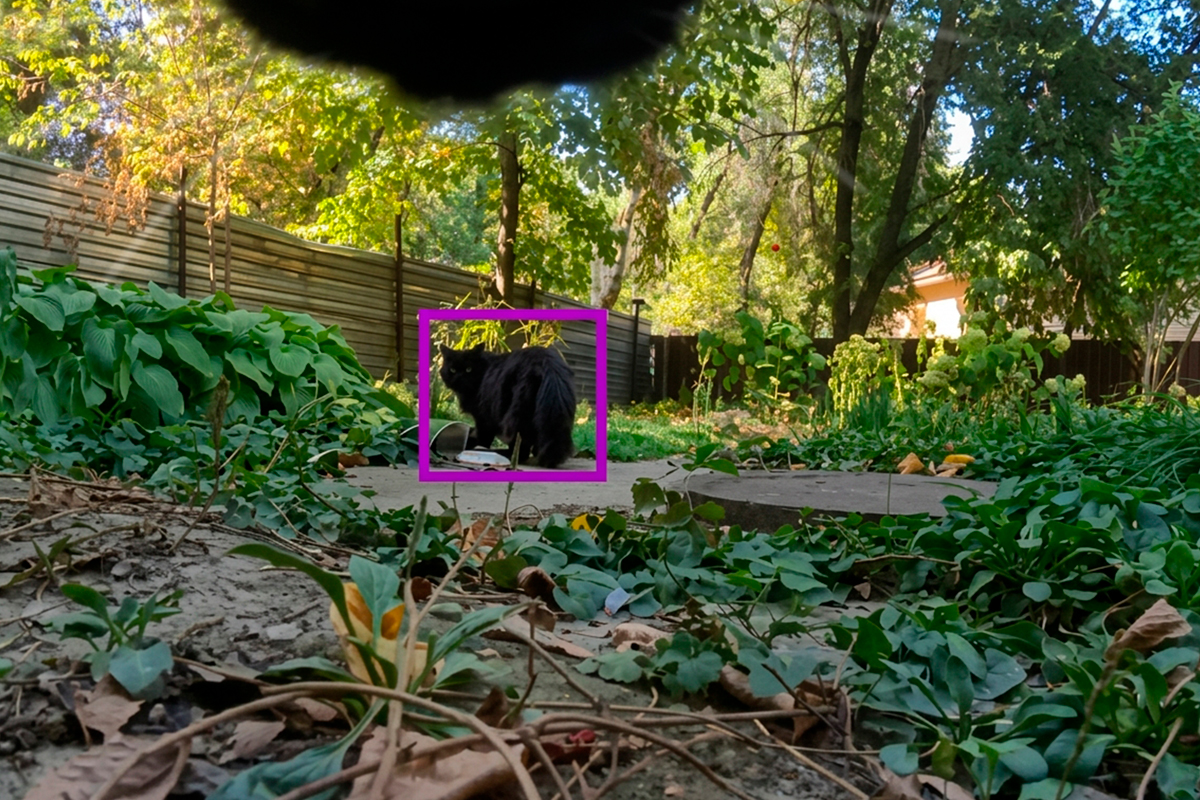
Some cats spot another cat from a distance and deliberately avoid getting closer. For us, that is not ideal, because the image may not be clear enough to identify the other cat and add it to the database. But we are working with living creatures that cannot exactly be briefed on how to get the right shot, so we work with what we have.
M: How does GdeKotBot work, and where does the camera footage fit into the search process?
We developed GdeKotBot last year. It works very simply: if your cat goes missing, you send a photo to the Telegram chatbot and add the location. The missing-pet report immediately appears in the database and on the map.
At the same time, anyone who spots a cat on the street can photograph it and send the image to the chatbot. There are far fewer cats on the streets of Kazakhstan than there are in Tbilisi, for example, so a cat outside here may well be someone’s missing pet.
The AI processes the photograph and compares it with missing-cat reports within a five-kilometre radius of the sighting. If there is a potential match, the owner receives a notification saying their cat may have been seen at a particular location. Sometimes people even take a cat home temporarily and look after it until the owner gets in touch.
When we first launched, we also partnered with the country’s largest digital out-of-home operator. Within minutes of a missing-cat report entering the database, it could appear on digital billboards in the area where the cat had gone missing.
That support has now ended, but we continue to promote the platform through digital channels. We launched the cat detective campaign to bring more people to the service.
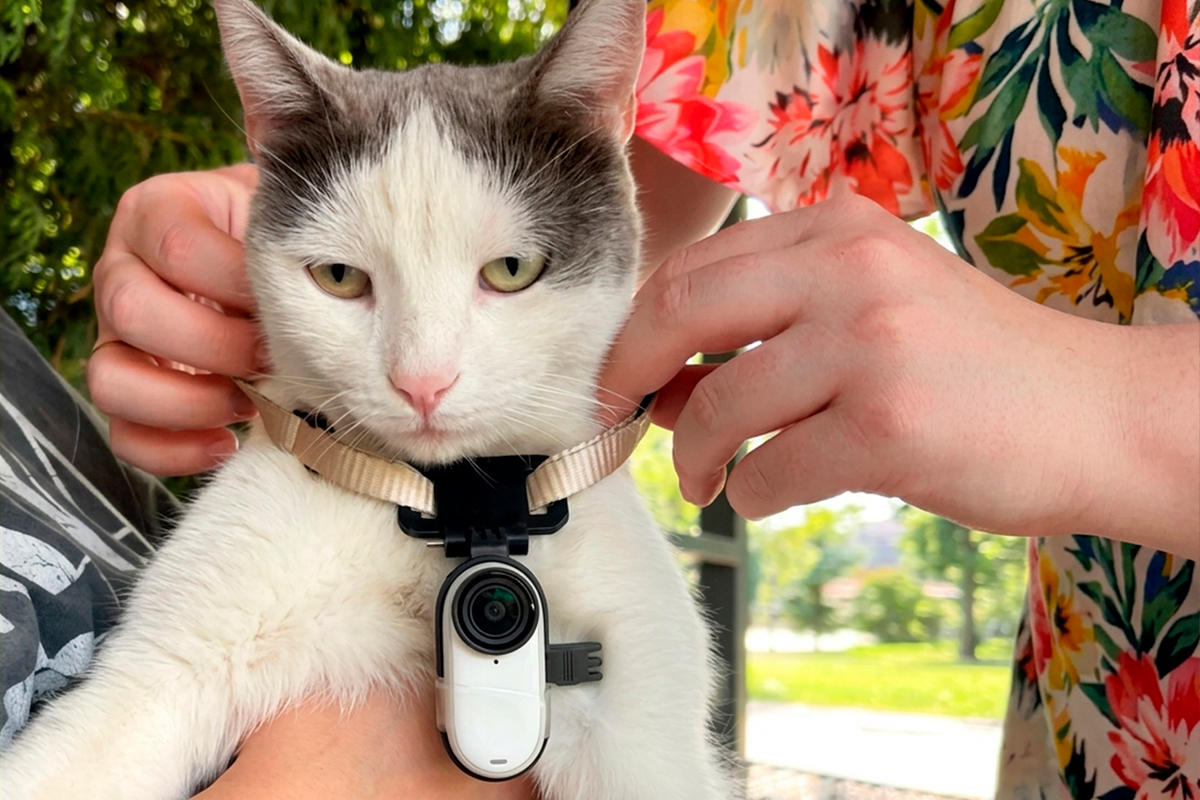
The cats wear cameras and record what they see outside. When they return home, AI processes the footage. It detects any cats captured on video, extracts images, adds them to the system and compares them with the missing-cat database. If there is a potential match, the owner is notified in exactly the same way.
For us, it does not really matter where the information comes from. It could come from these cameras, from people who care enough to photograph a cat on the street, or potentially from other sources. The important thing is that we receive an image. From there, the system can try to determine which cat it is and who might be looking for it.
M: Even people struggle to tell similar-looking cats apart. How does the AI identify a possible match, and what still needs to be checked by a person?
AI is far from perfect. We understand that a photograph of a calm cat at home can look very different from a photograph of the same cat moving around outside at dusk.
From the beginning, we tell owners that we will also send them similar-looking cats: those with a similarity score of 70% or higher, based on characteristics such as coat colour, distinctive markings, fur, ears and other features.
We cannot guarantee that a suggested match is the missing cat. The final decision always belongs to the owner. But owners understand this. They would much rather receive more potential matches than risk missing their own cat because of a poor photograph, bad lighting or an unusual angle.
At the same time, the AI allows us to filter out up to 90% of cats that clearly do not match, so owners are not constantly receiving completely irrelevant notifications.
M: How do you choose your “cat detectives” and check that they are comfortable wearing the equipment? Have any refused the job?
Thanks to the chatbot’s large user base, we were able to recruit volunteers who wanted to help and whose cats already roam outdoors.
We consider several things. First, location: ideally, a cat lives in an area with a high number of missing-pet reports, where we have the best chance of finding someone. Second, we look at how the cat reacts to wearing the equipment.
Many cats that roam outdoors already wear collars regularly, so the vast majority do not react to the collar or camera. But there have been a few cases where cats simply refused to wear the camera.
We always begin with a small test. We visit the cat at home, in a calm, familiar environment, put on the collar and camera, and observe it for about 10 to 15 minutes. If it shows no signs of discomfort and does not try to remove the collar, the owner can let it outside as usual.
All our collars have a breakaway mechanism. If a cat gets caught somewhere by the camera or collar, it can free itself with a strong pull. The equipment also has a tracker, so we can locate a camera if it is left behind.
Across the entire project, we have only had one case where a collar came off, so fortunately that has not been a major issue.
M: Sharing a cat video is easy. Photographing a cat in the street and submitting it to a chatbot takes more effort. What encourages people to participate, and how do you measure whether the campaign is working?
GdeKotBot has been running for a year, and we have seen that many people care and are willing to join the chatbot and help search for missing cats. Many are pet owners themselves. They know they could find themselves in the same situation one day, so they are willing to help other owners.
The main goal of this campaign is to raise awareness and make sure as many people as possible learn about the chatbot. Cold weather is coming, and we want to help bring missing cats home before they start looking for warm places to hide, which makes them much harder to find.
We measure the results quite simply. We can see how many new users join the chatbot and track the increase in both missing-cat reports and reports from people who have spotted cats on the street.
Our priority is to get as many people as possible to hear about the project. We understand that the cat detectives themselves will not be able to find a huge number of missing cats. But they can attract attention to a serious problem and encourage more people to help solve it.
M: What would need to change in a city where cats live in almost every courtyard?
The project makes more sense in cities without huge numbers of cats on the streets. We travel a lot and have visited Tbilisi, Baku, Istanbul and Tel Aviv, all places with very visible cat populations. When you are there, you cannot help thinking that our model would face a much bigger challenge, both because of the enormous load on the AI and because cats may behave differently in such a highly socialised feline environment.
It is difficult to say exactly how it would work without testing it first. We would run several tests and observe how free-roaming domestic cats integrate into the existing street-cat community: how much they interact, whether they approach or avoid other cats, where they hide and which routes they take.
We could then use those specific patterns of behaviour to adapt the search model for that particular city.