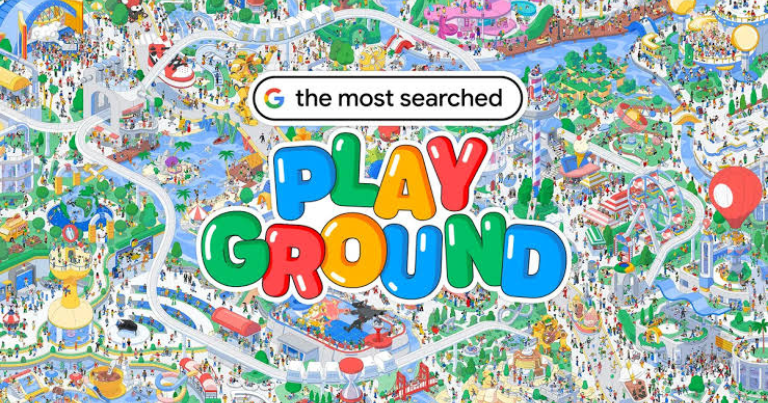
A game idea often starts with a small change: a different rule, an unexpected character or a setting someone wishes they could play in. Turning that thought into something playable usually requires learning the tools first. Google’s new platform, Playground, is designed to let people begin with the idea and work on it through conversation.
The experimental service allows users to create, test and share custom games by typing instructions, with no coding experience required. It has launched in the US for adults aged 18 and over, with tiered access to creation rolling out according to users’ Google AI subscriptions.
Google is bringing game creation and discovery together in a browser. Users can build something of their own, send it to friends or publish it in a shared gallery where other people can play.
From a description to a playable idea
Playground gives creators several starting points: a blank canvas, starter prompts to remix or guided support to develop a concept. Once a game has been generated, they can test it and request changes to its physics, rules, characters or environment.
That opportunity to revise is a significant part of the proposition. A first version gives the creator something to respond to. Instructions can then become more specific, shaped by what happens during play rather than by an abstract description of the finished game.
Google’s demonstration shows a prompt for a cosy game about ube lattes becoming ‘Ube Rush’. The example makes the intended entry point clear: someone can begin with a theme they like, without first having to work out how to implement it.
The creative decisions still belong to the person making the requests. They need to judge whether the rules are understandable, whether an action feels satisfying and whether the game offers a reason to keep playing. Playground aims to make those decisions easier to explore by reducing the technical work needed to try them.
Sharing is built into the process
Creators can keep their games private, share a link with friends and family or publish them to the Playground Explore gallery. Because the games run in a browser, people can play on a phone or laptop.
The platform also includes in-game leaderboards, with multiplayer available in selected genres. A Play Games profile lets users choose a handle, like games, follow creators and compete for higher scores.
These features give a small project several possible audiences. A game might be made for a few friends competing against one another, or for strangers who discover it through the gallery. Following creators gives players a way to return for new releases, extending the relationship beyond a single game.
Google says the gallery uses player ratings and play activity to highlight games. Published titles undergo safety screenings against its community guidelines, with user reporting also available.
Discovery will be an important part of the experiment. Making games easier to produce creates a separate challenge: helping players find ones they want to spend time with. The gallery’s recommendations and social features will influence which creations receive that attention.
More advanced tools are still to come
Google also plans to integrate Unity Spark, offering a route towards more advanced mechanics, higher-fidelity 3D and the capabilities of the Unity runtime. Games made through that integration are intended to be available for the wider Playground audience to play.
Unity Spark remains in testing, with a closed beta due to follow. Its promised capabilities should therefore be understood as a planned extension of Playground, rather than features available to every user at launch.
For marketers and creative teams, Playground is worth watching as a way to explore interactive concepts. A written idea for a game could become something colleagues can play and discuss earlier in the creative process. Whether the experimental platform meets the requirements of a particular commercial project would still need to be assessed.
The more immediate opportunity is personal. Someone with a game idea can test it, change it and put it in front of other players without beginning with a course in game development. The interesting results will come from what they choose to do after that first playable version.
Explore the platform at playground.google.