mrktr
  • Home
  • WORK
  • MAKERS
  • SCENES
  • SIGNALS
  • THE LADDER
No Result
View All Result
Marketer
  • Home
  • WORK
  • MAKERS
  • SCENES
  • SIGNALS
  • THE LADDER
No Result
View All Result
mrktr
No Result
View All Result
Retailers Are Teaching Gen Z to Sew, and Betting It Sells More Clothes

Retailers Are Teaching Gen Z to Sew, and Betting It Sells More Clothes

August 25, 2026
in SCENES, WORK
Reading Time: 2 mins read
A A
Share to Facebook

Levi’s, Uniqlo and Primark are turning needle-and-thread workshops into a loyalty play for young shoppers who care about waste and price alike.

Telling customers to fix their old clothes instead of buying new ones sounds like a strange way to run a retail business. Yet in-store repairs and sewing classes are quietly becoming standard service for apparel brands chasing a younger, thriftier, more climate-anxious shopper.

Repairs are old news for Patagonia and L.L. Bean. What’s changed is the company keeping. Levi Strauss & Co., Uniqlo and budget chain Primark have all picked up the thread, betting that a mending program buys them something a discount never could: a reason for Gen Z to trust the brand.

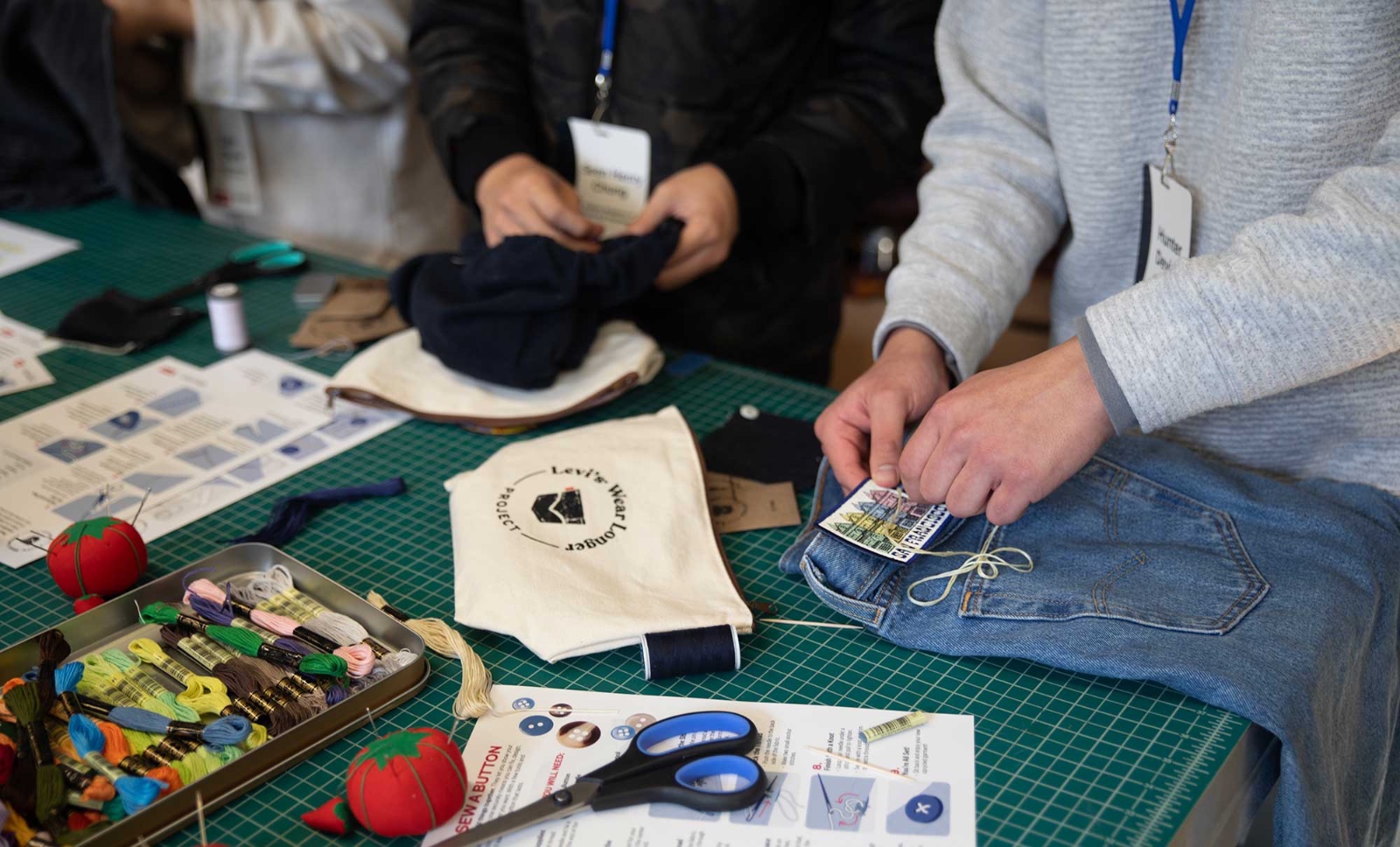
Levi’s built a handstitching course for high schoolers after concluding that many wanted to shop secondhand but had never learned to sew. Employees walk them through four fixes in 90 minutes: a button, a hem, a patch, a tear. Its Wear Longer program, now expanding across the U.S., sits on top of the repair services Levi’s already runs in hundreds of stores. Head of global design innovation Paul Dillinger frames it as handing customers the skills to keep a garment alive into a second life.

The backdrop is an industry under fire for its waste. Clothing production about doubled between 2000 and 2015 even as people wore each item far less, according to the Ellen MacArthur Foundation, which found that under 1% of discarded clothing gets recycled into new apparel. Gen Z grew up inside that machine and has driven resale to grow faster than regular apparel sales in the U.S.

Fast-fashion players are moving too. Zara runs a resale and repair platform in 17 markets, while Primark hosts free “Love It For Longer” workshops teaching skills like swapping a zipper. Uniqlo offers repairs and decorative sashiko mending in 75 of its stores, which its USA responsibility director Jean-Emmanuel Shein casts as deepening the customer relationship.

The critics aren’t convinced any of it moves the needle. Kate Fletcher, a fashion sustainability professor at Manchester Metropolitan University, calls the programs well-intentioned but doubts their payoff. The damage comes from overproduction, she argues, and fixing a shirt in a store happens on top of those rising volumes, not in place of them.

Then there’s the money. H&M Group has been unusually frank that the economics don’t work yet: making a new garment costs a business less than keeping an old one in circulation. In May, H&M, Primark, ThredUp and dozens of others signed a statement pressing the U.S. and EU for tax policies that would make repair and resale profitable.

That’s the real question hanging over the trend: whether mending can graduate from feel-good service to something that pays. Repairs are labor-heavy and hard to price low enough to tempt shoppers, and the shoppers send mixed signals, still buying fast fashion because it’s cheap and everywhere while routing more of their money into resale and repairs on the side.


 

Tags: Apparel IndustryBrand LoyaltyCircular FashionClothing Resaleconsumer trendsFashion RepairFast FashionGen Z ShoppingLevi'sLoyalty MarketingPrimarkRetail TrendsSlow FashionSustainable FashionUniqlo
Share1Share6
Previous Post

The Beige Empire: How Our Sofas Lost Their Color

Next Post

Apple’s New Mac Mini Gets Serious About Power

Related Stories

Golden Drum 2026: LePub sweeps the board as festival asks how AI can make us more creative

Golden Drum 2026: LePub sweeps the board as festival asks how AI can make us more creative

by David Keke
October 16, 2026
0

The Golden Drum International Festival of Creativity wrapped up in Portorož, Slovenia, on 13 October with its Awards Show, powered by Mastercard, celebrating work from 30 countries. From...

Good Copywriting Knows What to Leave Out

Good Copywriting Knows What to Leave Out

by Qetia
October 15, 2026
0

Giorgi Quca Rukhadze, copywriter and co-founder at Galileo Strategy, sometimes asks his students to write an ad and then cut every word it can survive without. The assignment...

Arsenal Gives Its History a New Typeface, Named After David Rocastle

Arsenal Gives Its History a New Typeface, Named After David Rocastle

by Qetia
October 15, 2026
0

A football club’s identity appears in places its crest was never designed to handle alone: a fashion collaboration, a music project, a poster or a few words on...

Beyond ‘I Like It’: Giorgi Kvlividze on How Creative Taste Develops

Beyond ‘I Like It’: Giorgi Kvlividze on How Creative Taste Develops

by Qetia
October 14, 2026
0

A piece of work can catch our attention before we know what to say about it. An image stays with us; an idea feels right. The explanation comes...

Next Post
Apple’s New Mac Mini Gets Serious About Power

Apple's New Mac Mini Gets Serious About Power

mrktr

Independent media for the new generation of marketers, creators, and thinkers.
MRKTR | born in London, inspired by the world.

Follow us

Recent Posts

Beyond ‘I Like It’: Giorgi Kvlividze on How Creative Taste Develops

Beyond ‘I Like It’: Giorgi Kvlividze on How Creative Taste Develops

October 14, 2026
Channel 4 commissions its first vertical drama, with Sol de Janeiro written into the plot

Channel 4 commissions its first vertical drama, with Sol de Janeiro written into the plot

October 14, 2026

Weekly Newsletter

  • Home
  • Advertise
  • Marketer.ge
  • Privacy Policy

© 2026 mrktrg

No Result
View All Result
  • Home
  • WORK
  • MAKERS
  • SCENES
  • SIGNALS
  • THE LADDER

© 2026 mrktrg

This website uses cookies. By continuing to use this website you are giving consent to cookies being used. Visit our Privacy and Cookie Policy.