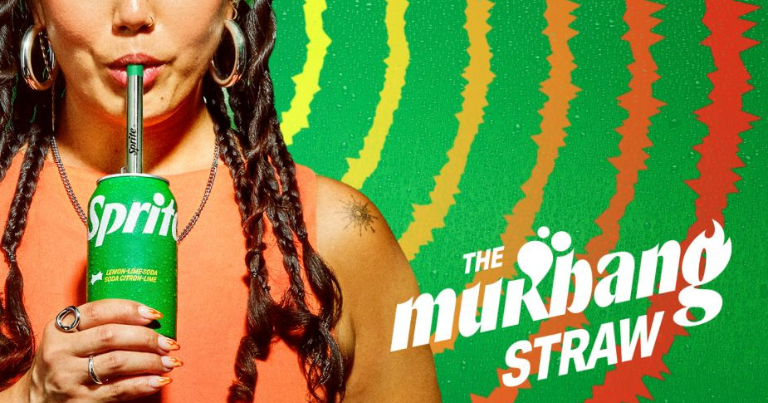
In a mukbang video, the sound of eating is part of the attraction. Crunching, chewing and sipping give viewers an experience that a photograph of a meal cannot. For Sprite’s latest Canadian campaign, that made the straw worth redesigning.
Working with Montreal industrial design studio Robocut, VML Canada developed a stainless-steel ‘Mukbang Straw’ designed to amplify the sound of drinking Sprite. The object gave food creators something to use on camera while placing the soft drink alongside the spicy dishes the brand wants young Canadians to associate it with.
The campaign brings Sprite’s ‘Hurts Real Good’ platform to Canada through WPP’s Open X, led by VML. Its starting point is the appeal of pairing spicy food with a fizzy drink for an even more intense sensory experience. The creative task was to find a way for that idea to work within the content its intended audience already enjoys.
View this post on Instagram
Finding a role for the drink
Speaking to LBB’s Jordan Won Neufeldt, VML Canada executive creative director Mélissa Charland explains that Canadian gen Z’s enthusiasm for spicy food was central to the brief. Mukbang offered a setting where the reactions, sounds and physical experience of eating already receive close attention.
“The audience was baked into the brief,” she says. “Canadian gen z over-index with spicy food. So, we asked ourselves, ‘Where are they loudly, proudly obsessing over it right now?’.”
A drink can easily become background scenery in a food video: a can beside the plate, visible but largely incidental to what people are watching. The straw was designed to give Sprite an active role in the performance. Taking a sip would produce a sound that creators could use as part of the video itself.
That is the useful creative decision here. VML identified an element the format values and built an object to contribute to it. The campaign’s connection to mukbang was carried by something a creator could demonstrate, with the drink remaining essential to the demonstration.
Thirteen prototypes and a basic drinking problem
Making the idea work required more than producing an unusual-looking accessory. Across the first two testing sessions, the team explored 13 prototypes, looking for a design that was durable, practical to drink through and capable of making the right sound.
Some options failed on appearance. Glass versions resembled bongs too closely. Others failed on function: early designs inspired by mufflers were difficult to drink through. Stainless steel eventually offered practical advantages in cleaning and production speed.
The harder problem concerned airflow. Introducing air helped generate the amplified sipping sound, but early versions made it difficult to draw liquid through the straw and depleted the drink’s carbonation. The mechanism intended to improve the content was interfering with the product being advertised.
The eventual solution used two separate channels, allowing airflow and liquid to move through the straw while producing the desired sound.
Those engineering details are central to the idea. An accessory that looked good in a promotional image but frustrated someone trying to drink would have given creators little to work with. Its usefulness on camera depended on getting an ordinary action right first.
“Relevance can’t be faked,” Charland tells LBB. “You can’t just decide to be part of a trend – you have to earn your place in it.”
Casting for the format
The creator strategy followed the same logic. Working with WPP’s influence and PR team, the agency sought people who could bring geographic and cultural representation alongside the expressive style the campaign required.
Two lead mukbang influencers, one Francophone and one Anglophone, were supported by creators working across food, mukbang and ASMR. Seeding boxes were designed to encourage additional coverage.
According to the LBB account, the rollout attracted a strong response and international pickup. No performance figures are provided, so its effect on sales or Sprite’s association with spicy food cannot yet be assessed from that reporting.
The creative approach, however, offers a specific lesson in working with creator formats. Audience size was only one consideration. The more important fit was between the object, the way a creator performs and what viewers come to that content to experience.
Charland also describes a team willing to work beyond its own tastes. Some of those involved struggled to connect with mukbang, but continued developing something for the people who enjoy it.
That discipline shows in the final object. Sprite wanted a place beside spicy food; VML made taking a drink part of the entertainment. The campaign gave creators a small new possibility within a format they already knew how to use.