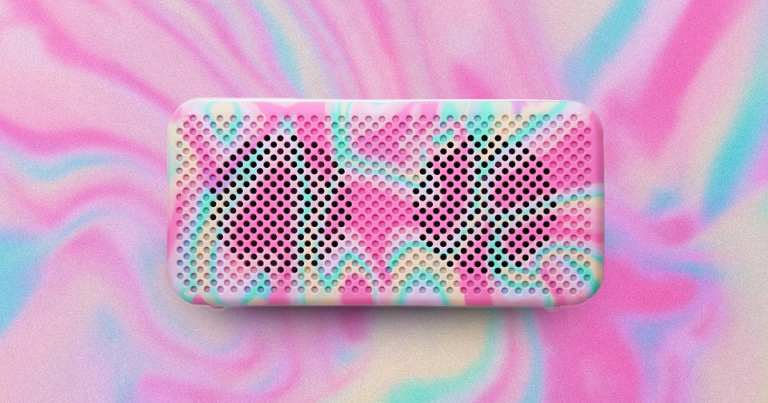
The pink swirls on Gomi’s latest speaker come partly from Barbie dolls that have finished their time in the toy box. Melted down with accessories and other recovered plastics, they form a colourful casing for a product their former owners might use as adults.
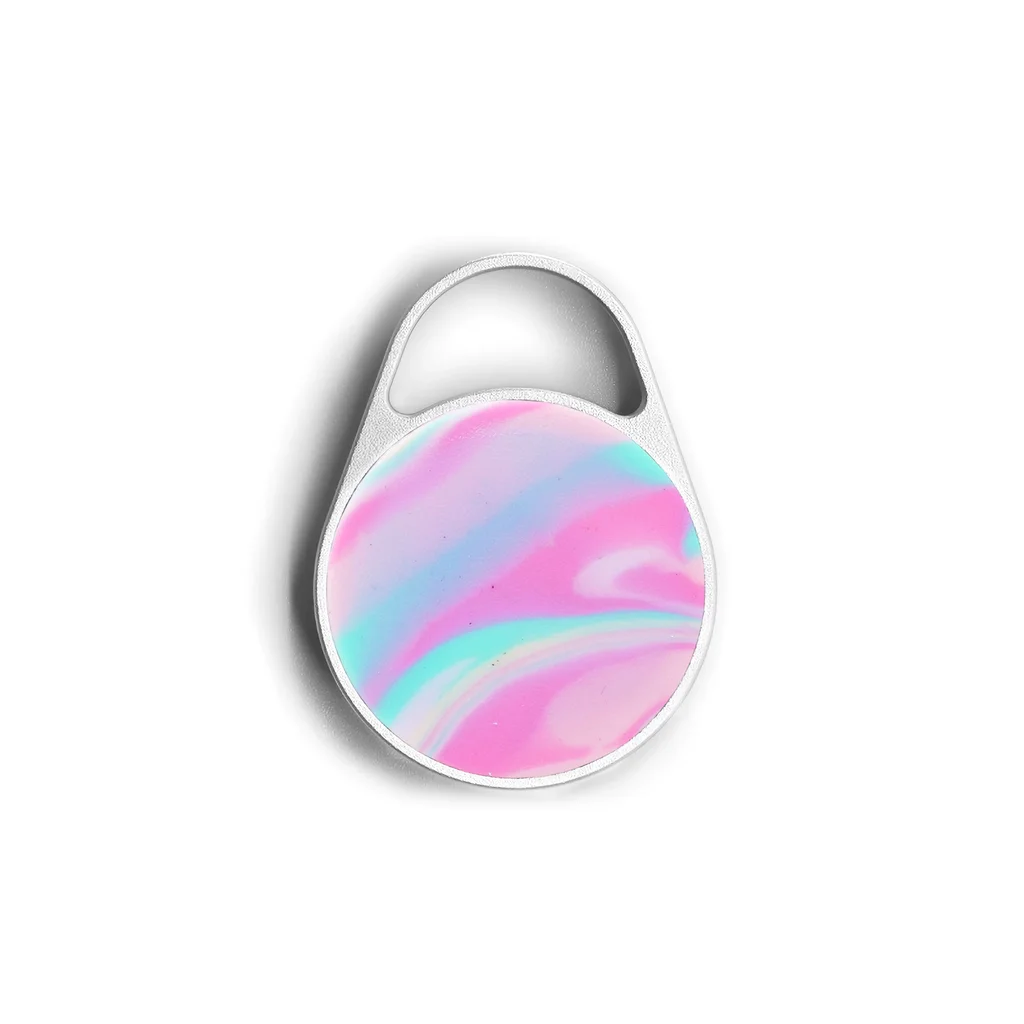
The British design studio’s Childhood Memories Collection is an official collaboration with Barbie, the Mattel-owned brand. It includes speakers, power banks, wireless chargers and tracker tags, giving discarded toys a new use while keeping something of their original identity visible.
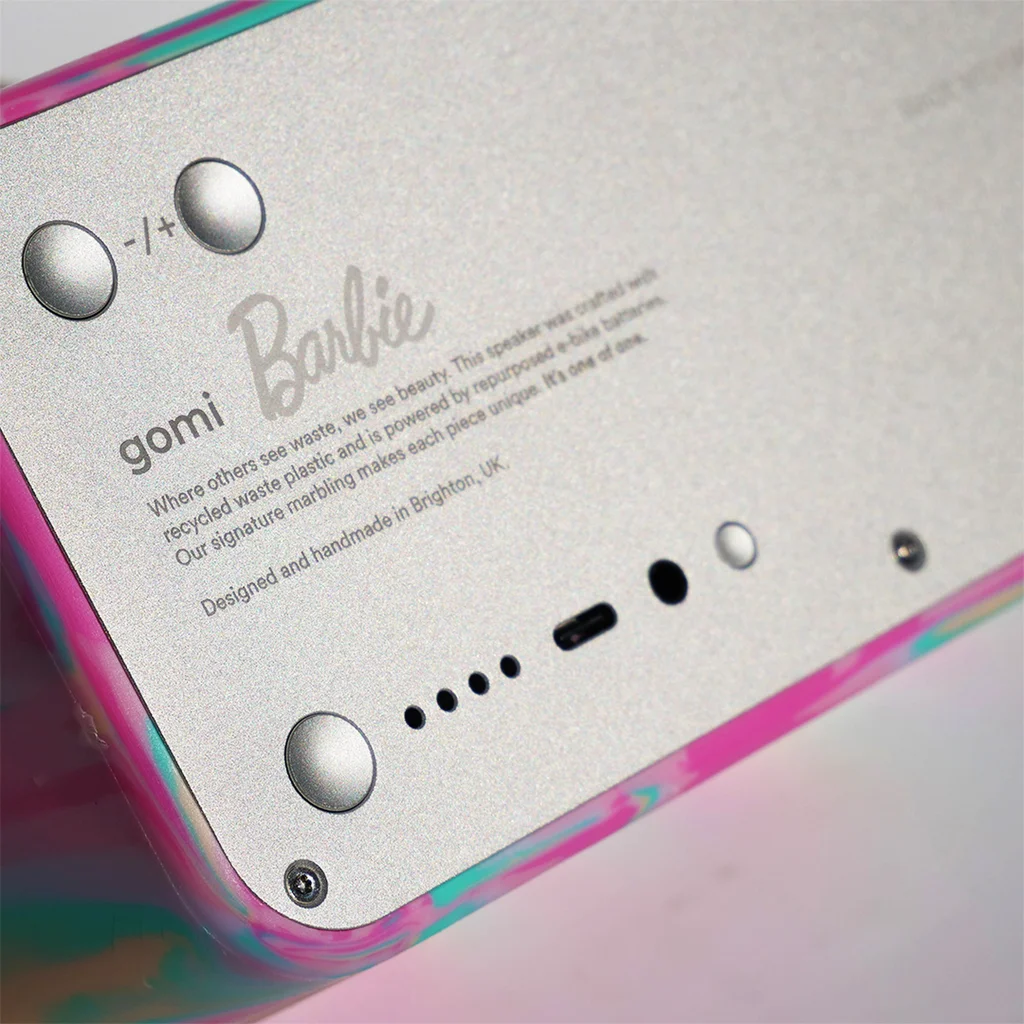
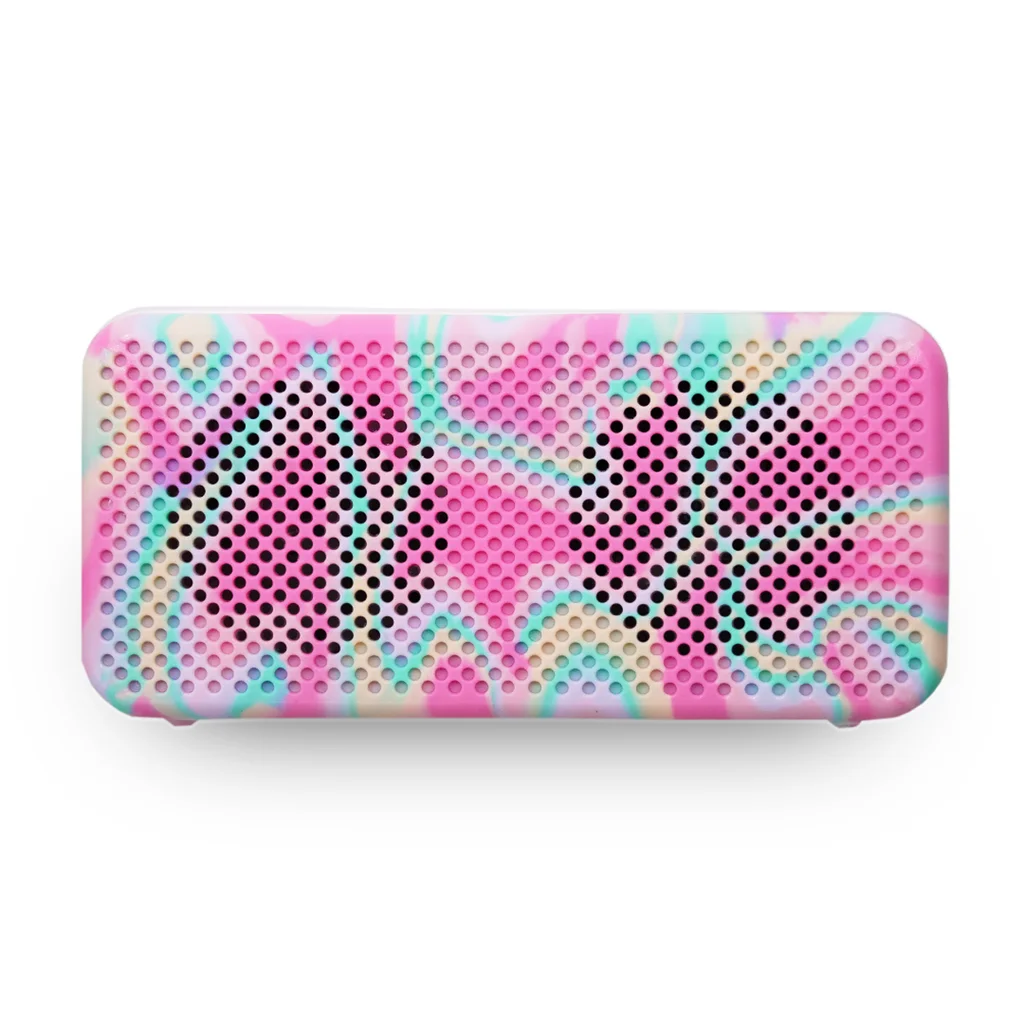
Pink, purple, turquoise and Barbie-blonde yellow run through the range in marbled patterns. Each piece is different, with the appearance shaped by the recovered material and the way it is worked by hand.
The colour comes from the waste
Gomi’s process begins by melting plastic at the lowest possible temperature needed to work with it. Layers of colour are then stacked, twisted by hand and cut, creating the swirls that distinguish one finished object from another.
Working with recovered plastics introduces inconsistencies. Different materials vary in quality and in how much they shrink, making it difficult to produce an entirely uniform surface. Gomi uses textured moulds to accommodate those differences and create a finish that feels intentional.
That approach gives the material a visible role in the design. The collection’s appeal depends on variations that conventional manufacturing might seek to eliminate. Buyers get a recognisable palette, but no two patterns are exactly alike.
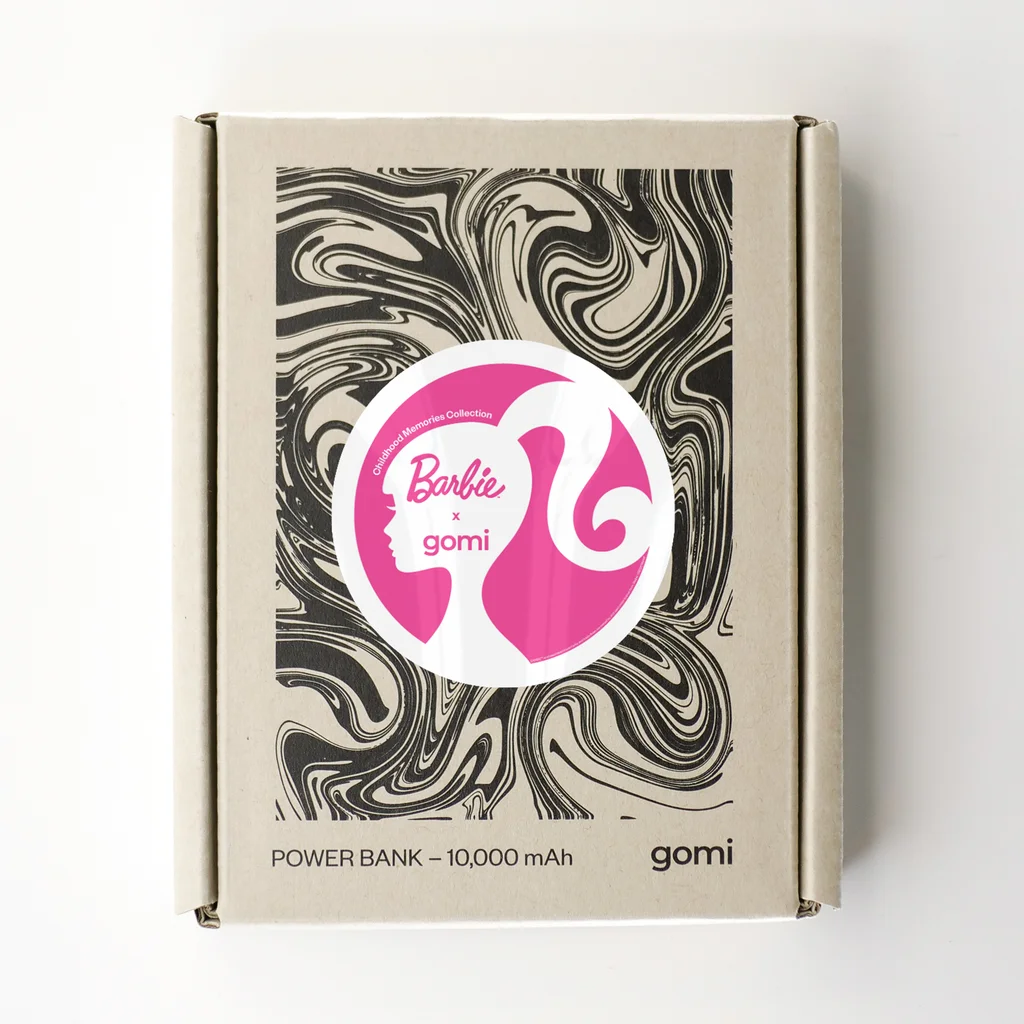
The products also contain more than discarded dolls. Barbie accessories and other recovered plastics contribute to the casings, while the speakers and power banks use repurposed batteries sourced from damaged and retired e-bikes. The toys are part of a broader effort to put existing materials and components back to work.
A second life with an emotional connection
Gomi was founded in 2017 with a focus on sustainable technology products. Its work includes flexible plastic waste, a material that is not widely recycled across the UK. The studio says one of its speakers uses the equivalent of around 44 plastic bags.
The Barbie connection began with speakers Gomi made from old dolls following the release of the 2023 film. Cofounder Tom Meades later contacted Mattel, leading to the official collaboration and a call for old Barbie dolls to contribute to the Childhood Memories Collection.
For Gomi, the partnership brings a widely recognised name to a relatively small design studio. It also gives the recovered material a history that customers can immediately understand.
“I’m not sure anyone has ever made electronics from recycled materials that have so much sentimentality attached to them,” Meades says.
That emotional association changes how the objects can be read. A recycled plastic casing might otherwise be appreciated for its colour or environmental credentials. Here, the material also recalls a familiar toy, with all the personal associations that can accompany it. The original doll’s form disappears, while its colours and connection to childhood remain part of the product’s appeal.
Familiar technology, individual objects
The collection includes speakers priced at US$371, power banks at US$95, wireless chargers at US$61 and tracker tags at US$45. The tags are compatible with Apple devices and include a built-in alarm.
These are familiar product categories, which makes the material choice especially noticeable. The functions need little explanation; the distinction lies in how the objects look, how they are made and what they used to be.
The collaboration also offers Barbie a way to appear in adult life through the substance of a product. The brand connection is carried by recovered toys as well as by the collection’s name and palette. That gives the partnership a closer relationship to Gomi’s existing design practice than a simple application of Barbie branding would.
The result is a collection whose history can be part of the reason someone wants to keep it. A doll once valued for play becomes a speaker or charger valued for daily use, with its bright plastic still visible in a different form.