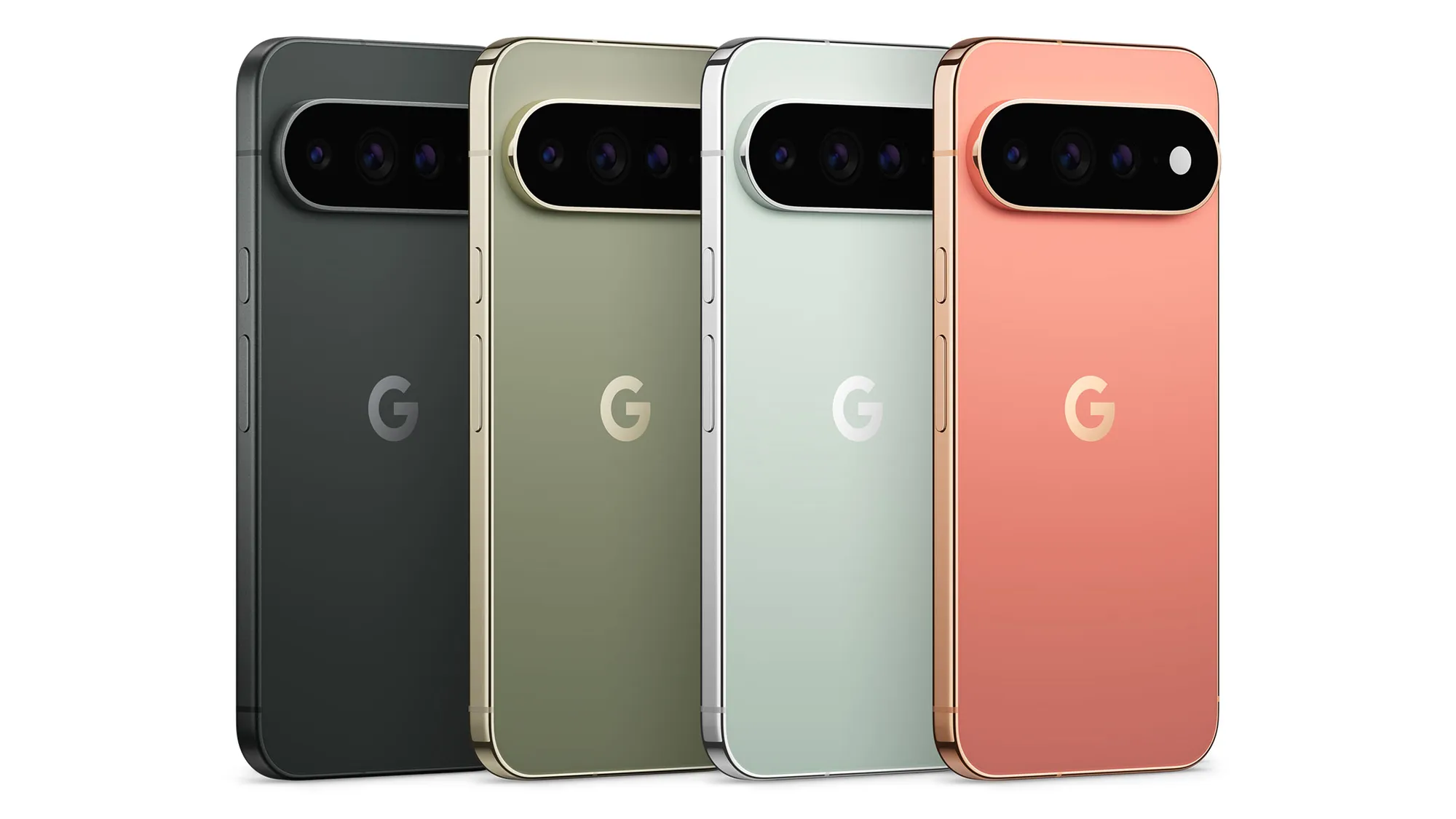
Google announced the Pixel 11 lineup at its Made by Google event in New York on August 12. The family covers four devices: the base Pixel 11, the Pixel 11 Pro, the Pixel 11 Pro XL, and the foldable Pixel 11 Pro Fold. Prices are higher across the board, and on two of the three main models, battery capacity went down.
What happened
All four phones run Google’s new Tensor G6 chip, built on a 2nm process. Google says it is around 20% faster and 20% more power efficient than last year’s Tensor G5, with an on-device processing unit that handles Gemini commands 50% faster. The Pro models get 16GB of RAM, up to 1TB of storage, screens peaking at 3,600 nits, and a new LED cluster on the back called HiLight that glows for notifications and Gemini activity.
Google also discontinued the 128GB configuration that anchored previous generations. The Pixel 11 now starts at $899 for 256GB, the Pro at $1,099, and the Pro XL at $1,299. Each is $100 or more above where the equivalent Pixel 10 model launched a year ago.
Why it matters
Battery capacity on the Pro models went down. The Pixel 10 Pro shipped with a 4,870mAh cell and the Pixel 10 Pro XL with 5,200mAh. This year’s Pixel 11 Pro comes in at 4,850mAh and the Pro XL at 5,115mAh. The base Pixel 11 moved from 4,970mAh to 4,985mAh, a difference small enough to be irrelevant in practice.
Google is still promising more than 30 hours of battery life, the same figure it gave last year, on smaller cells. That only holds if the Tensor G6’s efficiency gains are as consistent in daily use as they are in Google’s own testing.
The chip is a mixed picture. Early benchmarking reported by Android Authority and PhoneArena points to real CPU gains but continued weakness on graphics, where Tensor has trailed Qualcomm’s Snapdragon line for several generations, particularly in sustained gaming loads and ray tracing. That trade-off was easier to accept when a Pixel started at $799 and undercut its rivals. At $1,299, the Pro XL is priced directly against the Snapdragon 8 Elite Gen 5, a chip that outperforms it on raw processing.
Most of the keynote went to Gemini rather than hardware. Magic Capture fires the shutter automatically when it detects a good moment. Rambler strips filler words out of dictated text. Videos can be translated on the fly, audio included, and Circle to Search now works inside the camera viewfinder. Google described the shift as Android moving from an operating system to what it calls an intelligence system.
The bigger picture
The pattern across recent Pixel generations is a longer AI feature list each year alongside smaller measurable hardware gains and rising prices. Several of the AI camera features Google led with last year get little mention in this year’s coverage, which is worth keeping in mind when assessing how much of the current list will still matter in twelve months.
Google is not alone here. Most major manufacturers are using software and AI branding to justify annual price increases in a hardware category that has largely plateaued. Google’s position is more exposed than Apple’s or Samsung’s, though, because it has neither the ecosystem lock-in nor the manufacturing scale to fall back on if the AI pitch fails to differentiate.
Google says the Pixel 11 uses 100% recycled aluminium in its housing, recycled cobalt and lithium in the battery cell, and fully plastic-free packaging, calling it the most recycled phone it has made. But a smaller battery and a chip that lags on sustained performance make the longevity argument harder, and longevity is the part of sustainability that actually reduces replacement cycles.
What’s next
Pre-orders are open now, with in-store availability expected around August 20. The Pixel 11 Pro Fold usually arrives later in the cycle.