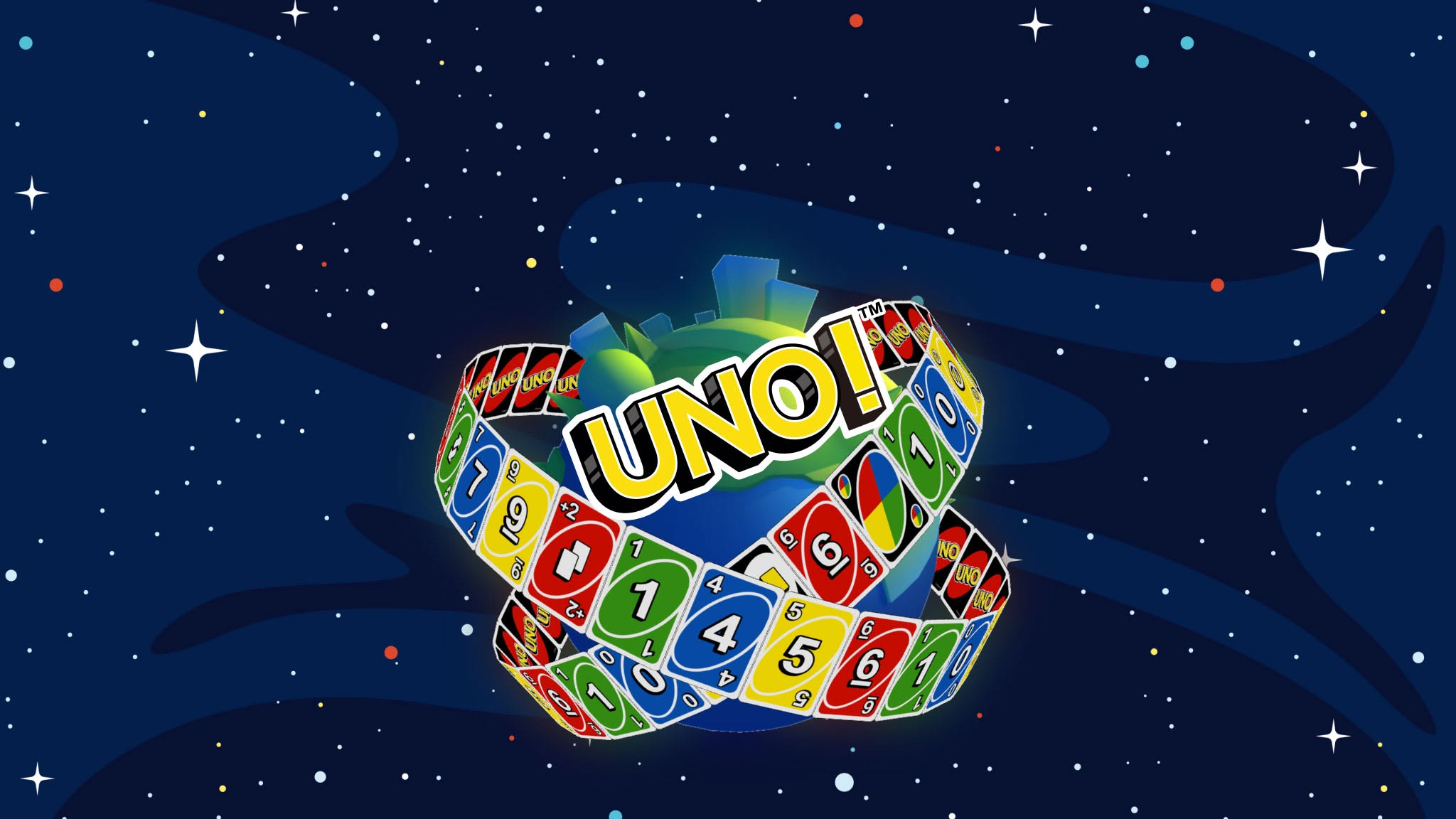
Mattel announced the UNO World Championship Series on August 20, offering a $50,000 grand prize to the winner of a global competition built around a card game that has been sitting in family game cupboards since 1971. Players can qualify through three in-person events in Orlando, Chicago, and Los Angeles this October, or remotely through the official UNO mobile app.
The app path is the more interesting one. UNO’s mobile version runs on the mechanics familiar from any live-service mobile game: daily challenges, customizable avatars, character progression, and three separate in-game currencies. Default play is 2v2 team mode rather than the free-for-all format most people grew up with, and Mattel has kept adding variants over the years, including UNO Attack’s “Discard All” card, which lets a player dump every card of one color at once.
What Mattel is doing here is applying the esports playbook to a game. UNO has the built-in advantage that almost everyone already knows the rules, which lowers the barrier to entry for both players and the streams and highlight clips a tournament generates.
It also reveals where the money in legacy game IP has moved. Mattel doesn’t need the championship to sell physical decks, since UNO is already one of the best-selling card games in history. The prize pool is a customer acquisition cost for the app, where daily logins, in-game currency purchases, and progression systems generate revenue. The tournament is the marketing; the app is the business.
Expect this format to spread. Hasbro owns a similar bench of nostalgia-heavy games (Monopoly, Yahtzee, Connect 4) that have had digital versions for years without a competitive layer attached. If Mattel’s championship draws real viewership in October, it becomes a template other toy companies test on their own back catalogs, treating decades-old game rules as ready-made IP for a livestream era that rewards games nobody has to learn from scratch.