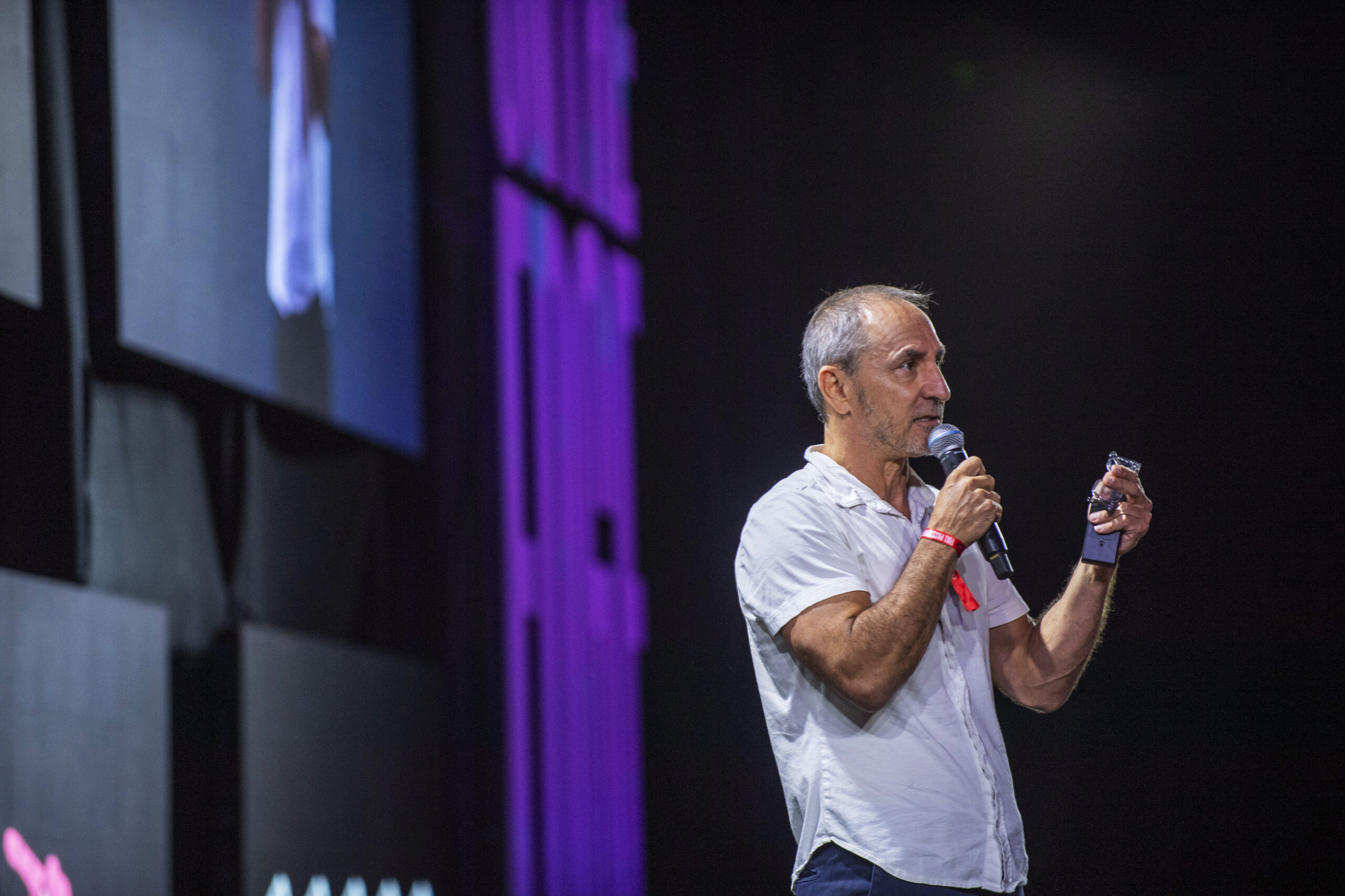
David Droga did not come to Ad Black Sea with a list of creative rules. In fact, one of the first things he did was dismantle the expectation that decades at the top of the industry might have produced some secret formula worth copying. “I’m not coming armed with a plethora of genius ideas or cheat codes,” he told the audience. All he wanted to explain was how he sees the world, why he sees it that way and why that belief system has remained almost unchanged since he was an 18-year-old creative student.
That belief system came down to something deceptively simple: creativity matters because it allows us to imagine what could exist beyond what already does. Droga called his talk Elegant Defiance, a phrase that fit almost perfectly into this year’s Ad Black Sea theme, On the Edge. Creativity, as he described it, is never only about invention. It can be resistance to a category, a convention, a government, laziness, apathy or the gravitational pull of doing things exactly as they have always been done. “Sometimes it’s pushing back on things,” he said. Creativity simply gives that defiance “a certain elegance.”
The origins of that worldview are far removed from Madison Avenue. Droga grew up as one of seven children in a national park in Australia, the son of a poet and activist mother and a businessman father. From his mother came an obsession with contributing something to the world; from his father, an understanding of independence. As the fifth son, almost everything he owned had belonged to someone before him. Clothes, bikes, toys, music. Looking back, he sees an early creative instinct in that experience: take whatever you are given and make more of it. “My talent was, I believe, taking something… and making it more.”
Advertising entered his life almost accidentally. Someone told him, when he was around 17 or 18, that there was an industry where people were paid to solve different problems every day using their imagination. He started in the mailroom, eventually reached the CEO’s office and discovered that both positions offered unusually good views of how organizations really work. But the part that never lost its appeal was much simpler: “Someone’s literally paying you to think about something and solve something for you.” Most professions ask people to follow processes, he argued. Creative work asks them to break them. “Logical geniuses and linear people, they make the world go round… creative people make the world a living. Because we don’t operate in what will be and what is, we operate in what could be and what should be.”
That distinction became even more important when Droga founded Droga5. He had already achieved the titles and corner offices people are supposed to want, only to discover that status offered little satisfaction if he was no longer close enough to the work. His philosophy at the new agency was almost aggressively straightforward: choose the work you want to care about. “I would rather fly in the middle seat in the back of a plane, next to a toilet, to a meeting I want to go to, than the front seat of a plane in first class to a meeting I don’t want to go to.”
It was here that Droga arrived at perhaps the clearest connection to On the Edge. Advertising, he argued, is constantly pulled toward the middle by research, approval processes and compromise. The middle feels safe because everybody has signed off on it. Nobody has taken enough risk to be blamed if it fails. “Compromise has a gravitational pull that pulls everything to the middle,” he said. “And the middle’s safe.” The problem is that very little progress happens there. “Great things can happen on the edges. Progress can happen on the edges. You can fail on the edges.”
The earliest Droga5 projects were built around that willingness to move away from the expected answer. When GE asked for an Olympic advertising campaign around Beijing, Droga looked at the familiar formula of athletes, inspirational messaging, billboards and television commercials and thought the $100 million budget would be better spent building something real. His proposed alternative was a permanent building in the Olympic Village made with GE technology that could also help purify polluted water. He knew almost nothing about architecture, environmental engineering or the mechanics of making such a thing happen. So he called Philippe Starck and other experts and asked them to join.
“Great ideas or interesting ideas find collaborators instantly,” he said. The project was ultimately rejected by the Beijing Olympic Committee, but the failure established an important principle for the agency: begin with what feels right, rather than what advertising traditionally allows. “Hold on to the absurdity because that’s what makes things interesting.”
The next project pushed in an entirely different direction. For Marc Ecko, Droga5 created the infamous video that appeared to show graffiti artists breaking into Andrews Air Force Base and tagging Air Force One. It was designed around the logic of graffiti culture rather than the conventions of fashion advertising. News organizations picked it up, the Pentagon had to deny that the plane had actually been vandalized and audiences helped carry the story forward themselves. For Droga, its success reinforced a distinction he still seems to value: “If the industry thinks you’re great, you’re probably good. If the real world thinks you’re good, you’re probably great.”
The same philosophy could produce something far quieter. Sitting in a New York diner while thinking about a UNICEF brief on access to clean water, Droga noticed the free glass of tap water placed in front of him. The infrastructure already existed: water, restaurants, customers, pipes. What if all advertising needed to do was change the meaning of that glass? The result was the UNICEF Tap Project, which invited diners to donate for the tap water they normally received for free. “All I wanna do is create a brand for something that already exists,” he remembered. The initiative eventually raised millions, proving his broader point that creativity does not necessarily mean inventing more stuff. Sometimes it means noticing the value hiding inside what is already there.
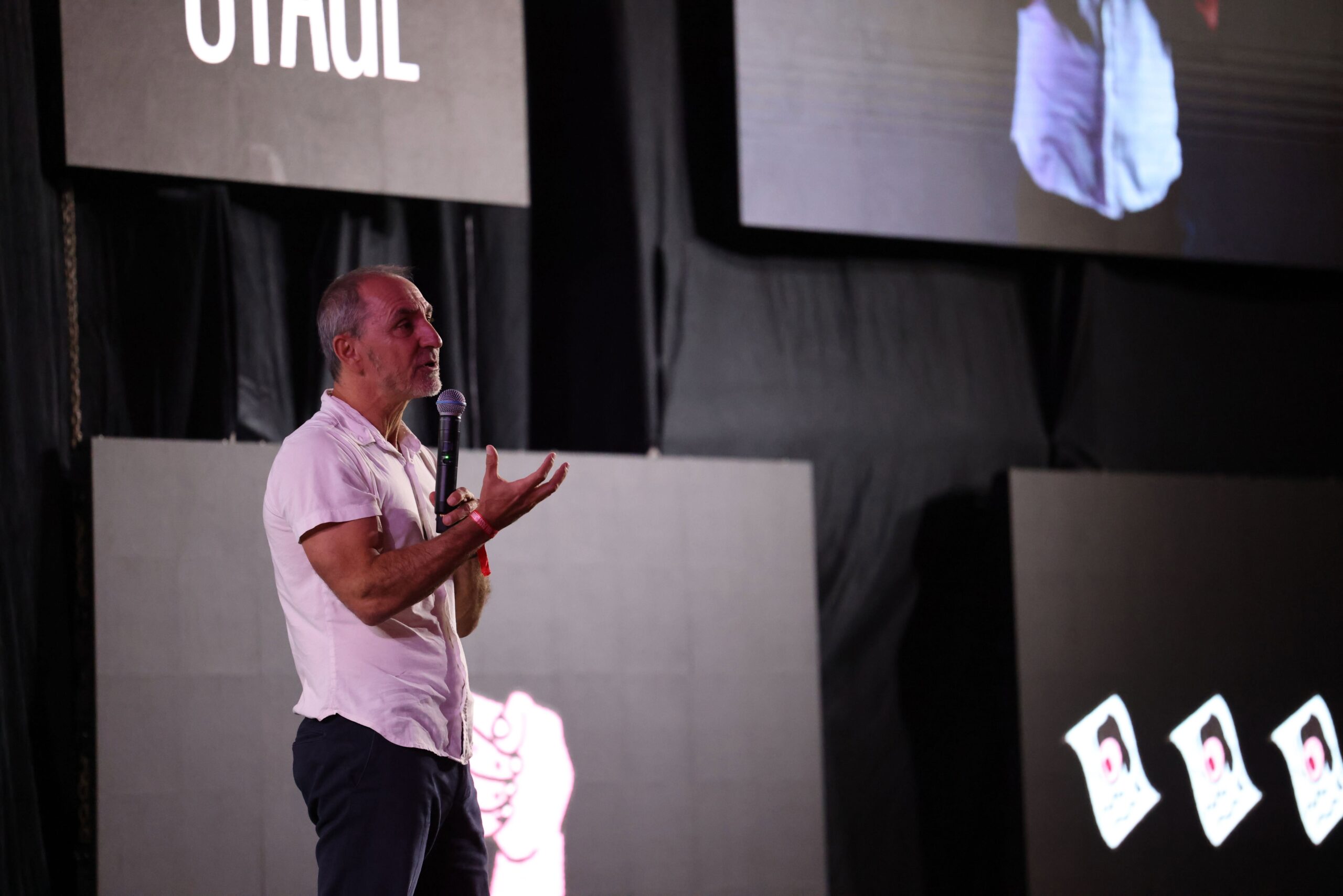
That approach also shapes how Droga talks about AI. He has little patience for panic about machines destroying creativity because, in his view, much of what industries currently label creative is already standardized enough to automate. “What creativity is it killing?” he asked. AI can outperform a huge amount of average advertising, architecture, journalism and entertainment. “Let it get rid of the messy, mediocre middle.” What he does not expect it to erase is “the unique, original and moving stuff.”
The more interesting question, then, is not whether AI will protect the existing advertising business. Droga openly believes that business model is already broken. What remains essential is the creative ability behind it. Technology is another canvas, and creatives should be the people experimenting with it, establishing its grammar, giving it purpose, utility and even absurdity. “The necessity of what we do has never been in higher demand,” he said. As automation becomes more powerful, he sees people who care about creativity, humanity, taste and quality as “the last line of defense.”
That defiance does not have to look radical. Droga repeatedly returned to one question he has used throughout his career when evaluating ideas: why would the intended audience give a shit? Not whether something is funny enough, beautiful enough, innovative enough or award-worthy enough. Is it right? Is there truth in it? Does it deserve someone’s attention? Starting with those questions, he argued, gives creatives permission to go almost anywhere.
And that may be what Elegant Defiance ultimately meant. “If there’s no defiance in your creativity, then it’s just creativity for the sake of it,” Droga said. The work has to push against something, whether that is convention, complacency, a category or simply the assumption that the obvious answer is the correct one.
None of this, he insisted, is heroic. “There’s nothing noble or brave in what I’m doing. It’s just fucking common sense.” It also happens to be far more enjoyable than spending a career defending work nobody really believes in. After all, “it takes the same amount of energy to justify something mediocre as it does to try and do something great.”
So why stay in the middle?
Droga ended somewhere more personal than advertising. Caring, he admitted, is difficult. It makes the work more emotional, makes disappointment more painful and makes it considerably harder to detach yourself from an outcome. But it is also the fuel that has carried the same belief system from an 18-year-old in Australia to everything that came afterwards.
“If you just care about something, that’s fuel for you for your entire life.”
For a festival asking what it means to live and create On the Edge, Droga’s answer was surprisingly uncomplicated. Care enough to resist the comfortable middle. Know what you believe is right. Then use whatever imagination, influence and technology you have to push it a little further.