The AI boom has made powerful tools available to companies of almost every size. What it has not solved is a more basic problem: knowing where AI actually belongs inside a business, what should be automated, and which changes will have a measurable effect on revenue, efficiency or customer experience.
That is the space a new company, meti, wants to occupy. Operating across Georgia and Spain, meti brings together AI transformation, CRM strategy and technology development, with the aim of helping companies move beyond isolated tools and build systems they can eventually manage themselves.
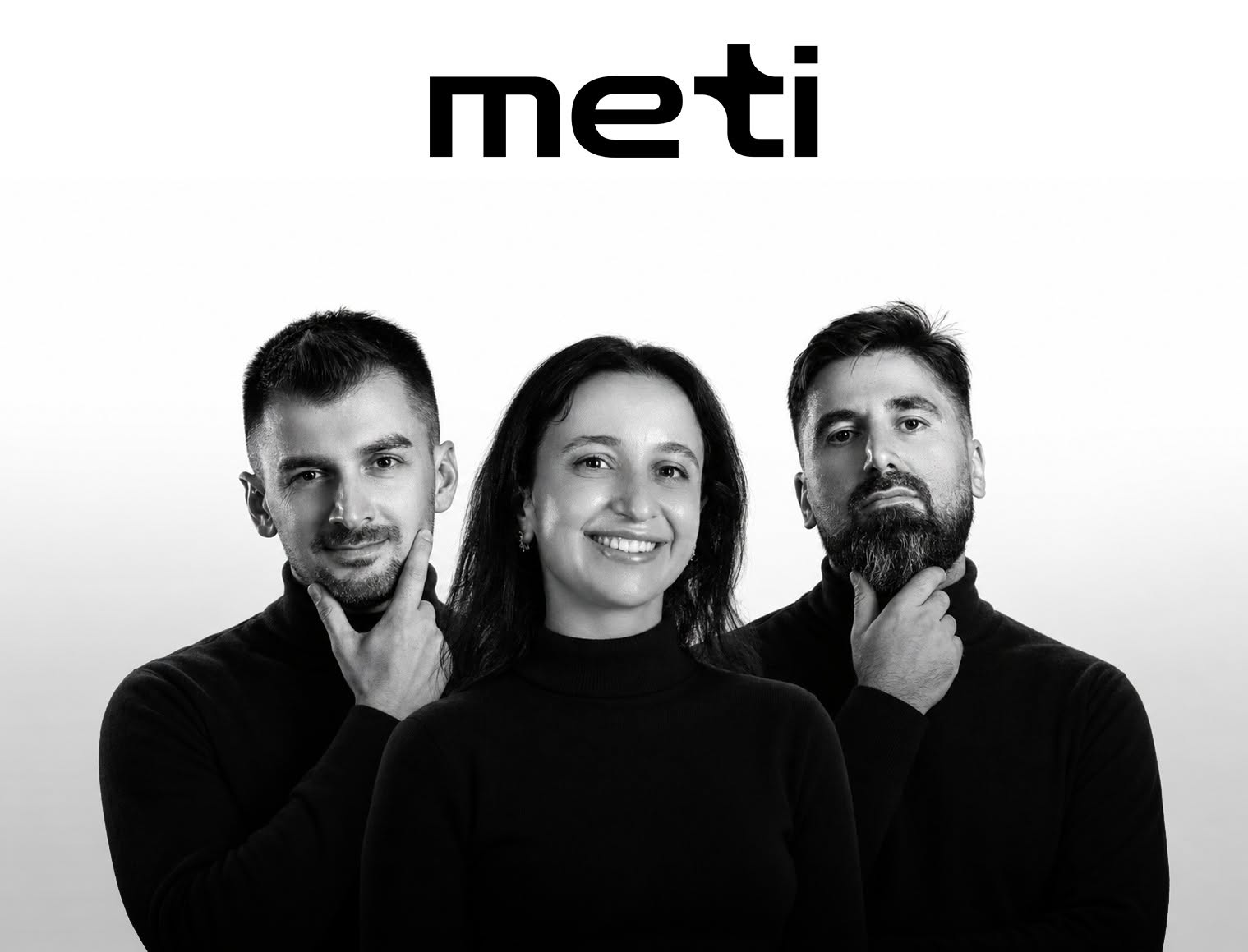
The company was founded by Salome Gozalishvili, Beka Zakaidze and Levan Paitchadze, whose backgrounds cover three sides of the same challenge. Gozalishvili has more than a decade of experience in CRM and customer-centric marketing for global companies, working with millions of users. Zakaidze specialises in AI transformation, including business superintelligence applications and voice AI solutions, while Paitchadze has more than 13 years of experience in technology development and building digital solutions.
“That combination is our main strength. We know how a well-designed CRM system can increase revenue and profitability, how AI can change a company’s efficiency, and how all of it needs to be built technically. Strategy, AI and development sit within one team,” says Salome Gozalishvili, co-founder of meti.
For meti, the opportunity comes from a shift that has happened remarkably quickly. Personalised, timely and automated communication at scale was once largely reserved for companies with significant budgets and technical resources. AI has changed that equation.
“What used to be possible only for large companies is now available to almost every business. The problem is that companies often do not know why they are doing it or where it will create real results. meti was created to answer those questions,” says Gozalishvili.
Rather than beginning with a new platform or a piece of software, the team starts by looking at how a company already works. The process includes identifying gaps, deciding where automation is genuinely useful, and understanding whether the problem requires new technology, better integration or a change in how the team operates.
meti also places particular emphasis on using existing technology more effectively. As AI capabilities expand, the founders argue that companies do not necessarily need to keep adding expensive and complex SaaS platforms. In many cases, integrating AI into tools already used by the business can reduce implementation time and cost while allowing teams to see results faster.
The company’s model goes beyond consulting. meti works alongside internal teams to build customised AI agents and automations, while training employees to operate and develop those systems independently.
“Our goal is simple: tomorrow, companies should no longer need us and should be able to continue their AI adoption themselves,” says Gozalishvili.
CRM is the other major part of the company’s work. meti treats it not simply as a sales tool, but as a system that should shape the customer relationship from the first interaction through to repeat purchases. According to Gozalishvili, one of the most common mistakes is starting with the technology itself rather than the business problem it is meant to solve.
A company might buy a platform, launch campaigns or automate communication without first defining where the actual opportunity lies. Another common issue is sending the same message to every customer, regardless of where they are in the customer journey.
The company’s presence in both Georgia and Spain is central to how the founders see the business developing. Gozalishvili is based in Barcelona, while Zakaidze and Paitchadze are based in Tbilisi, giving the team direct exposure to two markets moving at different speeds.
According to Gozalishvili, Spain has a more mature technology environment, with established infrastructure, data protection standards and tools, although decision-making can take longer. Georgia, by contrast, offers greater speed and flexibility. Companies are growing quickly in digital channels and are often strong at customer acquisition, while retention systems are still less developed.
“That gap is an opportunity. Georgian companies can skip some of the stages Europe spent years going through. Working across both markets allows us to bring approaches already tested in Europe to Georgia and implement them at Georgian speed,” says Gozalishvili.
For a new company entering an increasingly crowded AI market, meti is positioning itself around a relatively practical premise: the value of AI is not in adopting more tools, but in knowing where technology can change the way a business actually works.