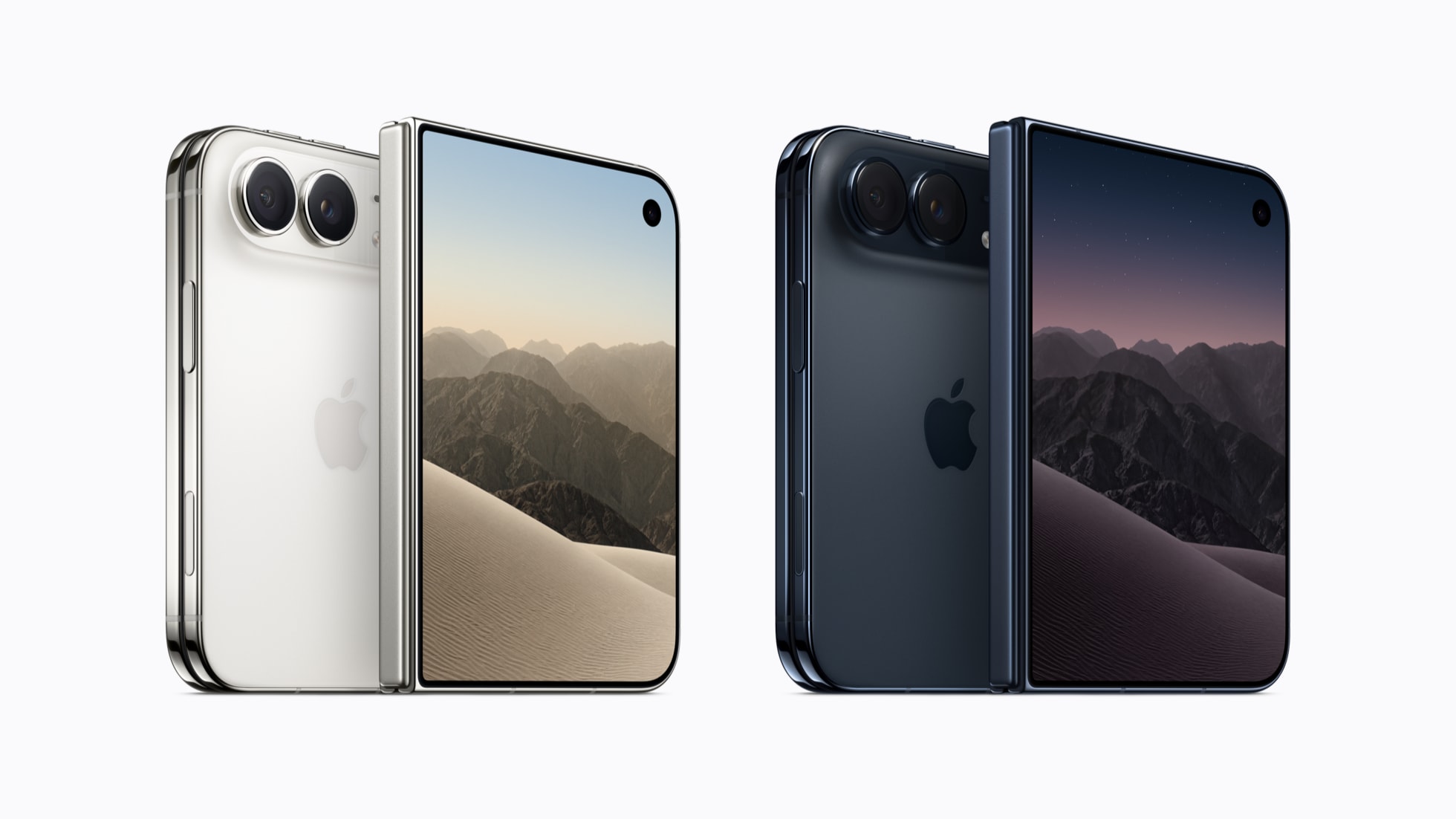
Apple unveiled its first foldable iPhone on Tuesday, closing a gap that Samsung and Xiaomi have been filling since 2019. The iPhone Duo starts at $2,000, rises to roughly $3,000 for the 2TB model, and opens pre-orders on September 12 ahead of an October ship date.
The device folds around a 7.6-inch internal Super Retina XDR display, about 50% larger than the screen on the iPhone 18 Pro Max, with a 5.4-inch panel on the outside for everyday use. Apple built the hinge from carbon fiber and wrapped the frame in grade 5 titanium with a nano-texture coating, rating the whole thing IP68 for water and dust resistance. It comes in two colors, star white and night sky, runs on a new A20 Pro chip with a dedicated display engine for managing both screens, and connects through Apple’s own C2 modem with mmWave 5G. Two batteries work as a single unit, rated for up to 44 hours of video playback on the outer display and 24 hours of mixed use, with five minutes of charging returning five hours of that outer-screen playback. The camera system pairs a 48-megapixel main sensor with a 12-megapixel 2x telephoto lens and an under-display FaceTime camera. Touch ID sits in the side button; there’s no Face ID. Apple Pencil support is coming later this year, and the phone ships eSIM-only worldwide. iOS 27 adds foldable-specific software, including split-screen app pairing and a half-folded tabletop mode.
The launch is also the first real test for John Ternus, who became Apple’s chief executive on September 1 after Tim Cook stepped down. Every foldable-phone comparison reviewers write over the next year will measure Apple against rivals that have spent seven years fixing the hinge creases and battery compromises that plagued early folding phones. Apple’s answer is to arrive last with a device built around thinness, hardware polish and a price that puts it above every other iPhone on sale.
That price matters beyond this one product. Component shortages tied to AI data center demand pushed Apple to raise prices across its iPad and Mac lineups earlier this year, and the Duo’s $2,000 floor extends that pattern into the phone that defines the company’s business. Foldables still make up less than 2% of global smartphone shipments, according to Counterpoint Research, which expects the category to keep growing this year as more buyers get comfortable with the format Samsung and Xiaomi normalized.
Apple has flagged that supply will be tight for months after launch, a familiar pattern for a first-generation device but a risky one for a phone this expensive. Whether the iPhone Duo becomes a genuine sales driver or a low-volume flagship that mostly signals ambition depends on how it holds up once it’s in reviewers’ hands rather than on a keynote stage.