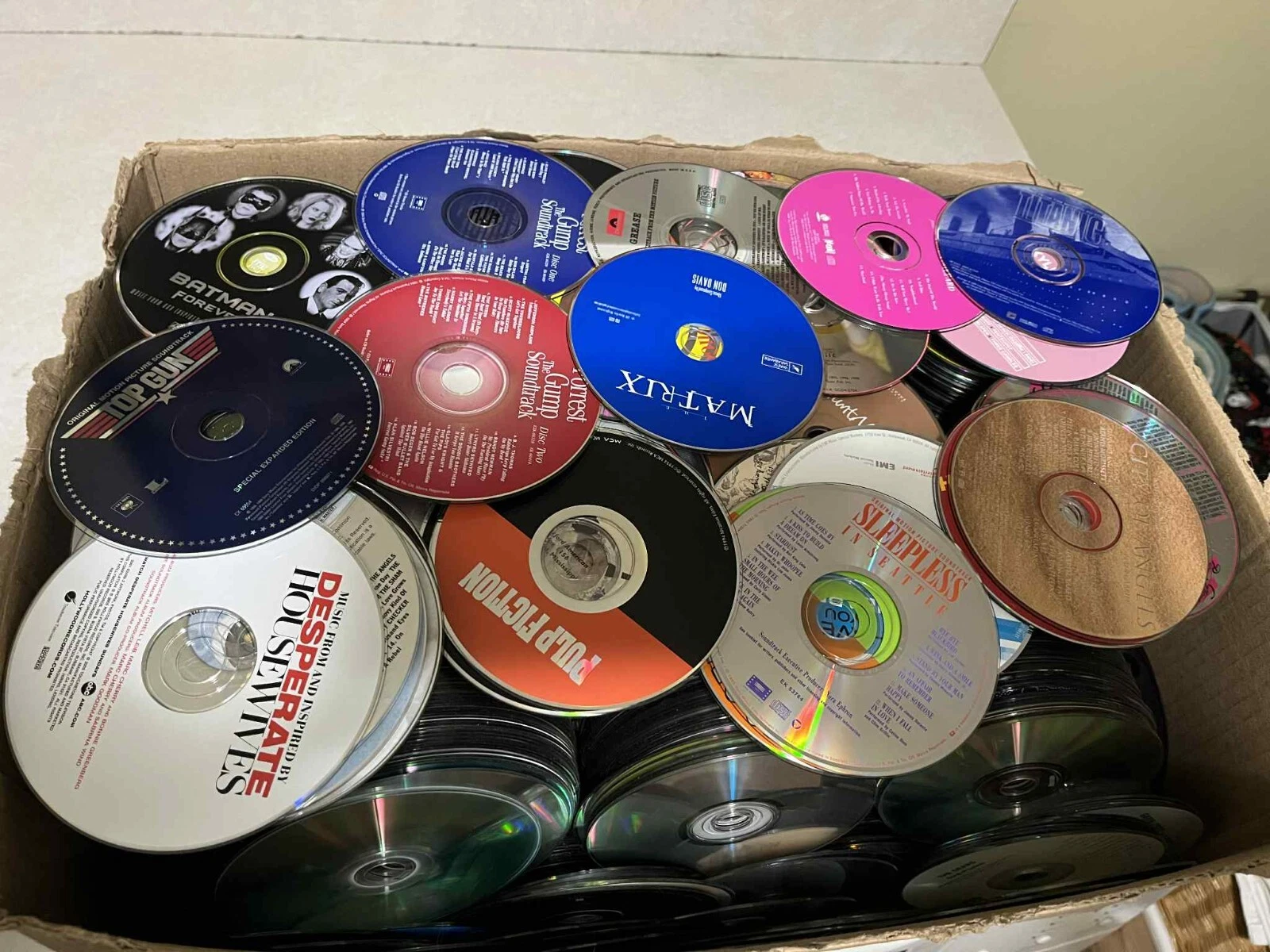
For most of the past decade, the story of physical music had one protagonist. Vinyl came back, kept coming back, and became the shorthand for everything streaming could not offer: something to hold, something to display, something worth paying £30 for. The CD was the format nobody was nostalgic about.
That is changing. According to Luminate’s midyear report, US CD sales rose 16% to 16.3 million units between January and June. Vinyl grew 2.3%. That is roughly six times the growth rate for the format that spent fifteen years as the industry’s punchline.
What is actually driving it
The obvious explanation is K-pop, and it is partly right. BTS returned in March with ARIRANG, and K-pop fandoms buy physical product at a scale that distorts any chart they touch. But strip K-pop out of the numbers entirely and US CD sales still grew 6.7%. Something broader is happening underneath the fandom spike.
The most revealing statistic in the report is not about units at all. Around half of the Gen Z and millennial buyers purchasing CDs do not own a CD player. They are buying an object that proves a relationship with an artist, in a market where the music itself is functionally free and infinitely available. The disc is a token.
Price is the other half of the answer. In the UK, where the BPI tracks average prices closely, a vinyl LP now costs £29.03 against £12.24 for a CD. If the purchase is symbolic rather than functional, paying less than half as much for the same symbolic value is a rational trade.
The UK is running the opposite experiment
Here the global picture gets interesting, because the same six months in Britain produced almost exactly the inverse result.
UK vinyl sales grew 16.4% in H1 2026, to 3.8 million units, with Q2 accelerating to 17.9%. CDs fell 5.2%. Physical overall was up 3.7% to 8.1 million units. Vinyl is now within roughly 213,000 units of CDs in quarterly volume, and analysts expect it to pass CDs outright by the end of the year, something that would have sounded absurd in 2015.
So the US is having a CD revival while the UK is having a vinyl one. Both markets are growing physical. They are growing it through different objects.
The likely explanation is composition of demand. The US physical market has a much heavier K-pop and superfan-driven layer, where labels engineer collectible variants, photocards, and multiple editions, and CDs are the cheapest vehicle for that. The UK market skews toward catalogue, guitar bands, and heritage acts, where the vinyl LP has always been the artefact of choice.
The bigger picture
Globally, IFPI reported that recorded music revenue reached $31.7 billion in 2025, up 6.4% and the eleventh straight year of growth. Physical returned to growth at 8.0%, with vinyl up 13.7% for its nineteenth consecutive year of expansion. Streaming subscriptions still account for 52.4% of everything, with 837 million paid accounts.
Physical is not challenging streaming and will not. What it has become is the industry’s merchandise layer, a way to convert attention into a purchase that streaming’s per-play economics cannot match.