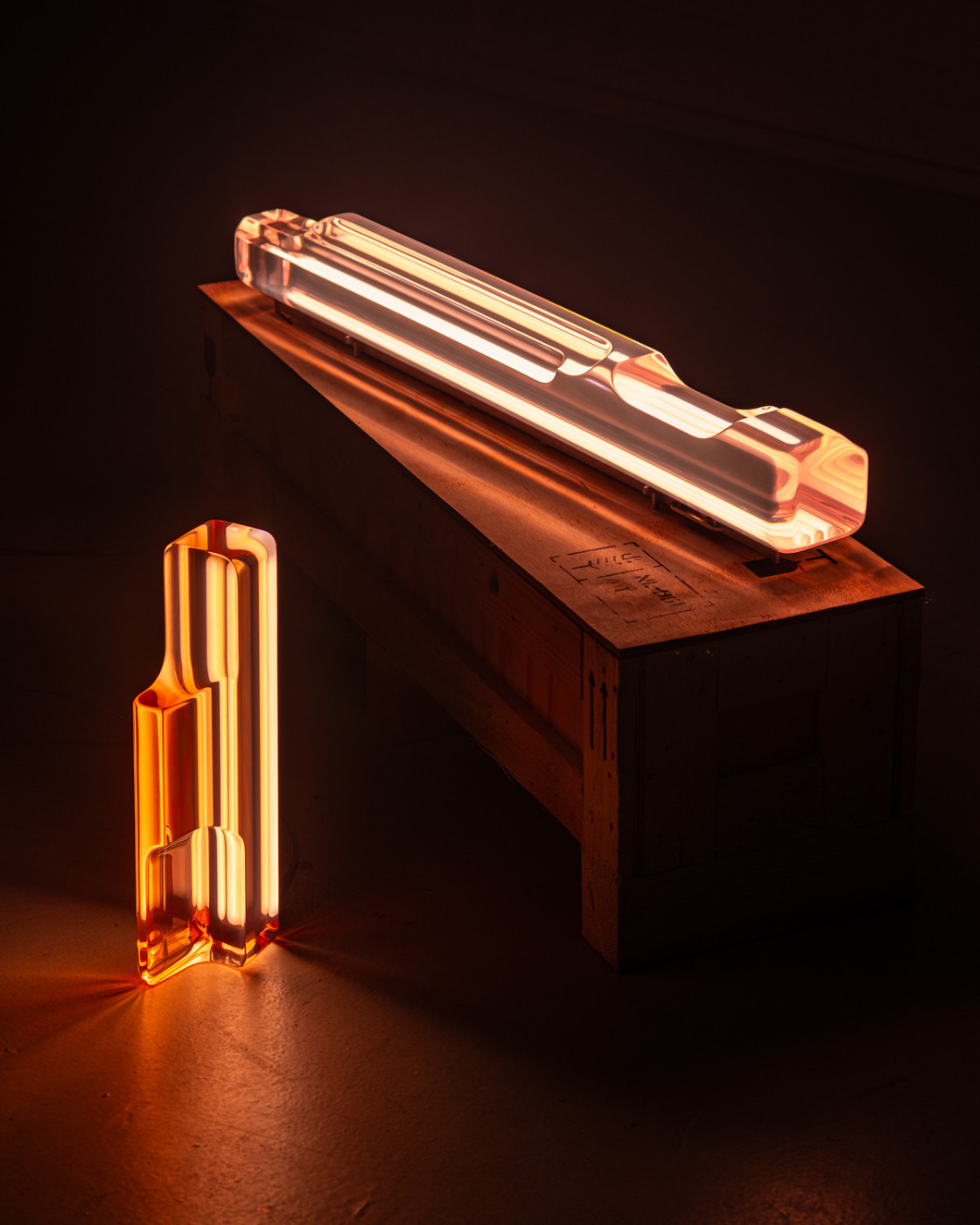
Laurids Gallée doesn’t build lamps so much as sculpt the paths light takes through resin. The Austrian designer, based in Rotterdam, spent roughly a decade refining a technique of sculpting, sanding, and polishing polymer resin until it reads as translucent, almost molten. His Cairn collection, unveiled at the inaugural Design Biennale Rotterdam in March 2025 with Dubai gallery Collectional, pushed that idea to its largest scale yet: six freestanding light sculptures, the tallest over six meters, some weighing more than 100 kilograms, glowing in gradients of amber, gold, lilac, and deep orange.
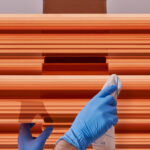
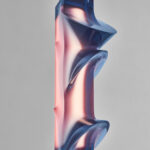
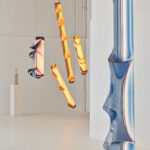
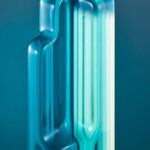
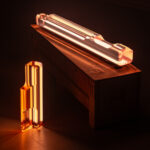
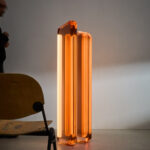
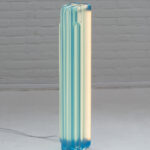
The name nods to cairns, the stacked-stone markers used for centuries to guide travelers. Gallée wanted the same sense of precarious balance in objects built from a material that’s anything but light. “I wanted something calmer, where light feels almost liquid,” he told Dezeen, describing a deliberate move away from the sharper, more graphic lighting he’d made earlier in his career. At this size, structural engineering became as important as aesthetics. Every polished surface amplifies flaws, so the connection points holding these sculptures together needed the same precision as the light itself.
Gallée’s practice extends well past lighting. He’s worked with Hermès Vienna, Dolce & Gabbana, Gucci, and the Czech crystal house Moser, applying the same material curiosity to furniture in marble, bronze, and solid wood. His pieces now circulate through galleries like Artsy and 1stDibs rather than furniture showrooms, part of a broader shift in design toward collectible, one-off objects that blur the line between sculpture and function.
That’s the real story behind Gallée’s lamps. Lighting used to be a category manufacturers optimized for output and efficiency. Increasingly, it’s becoming a canvas for designers treating light itself as raw material, worth years of technical obsession to get exactly right.