A customer picks up a familiar drink, notices the new packaging and takes a sip. Something seems different. Perhaps it tastes sweeter, lighter or less like the version they remember. The company insists the recipe is unchanged. The customer remains unconvinced.
Both can be telling the truth. Keeping the ingredients the same does not guarantee that the experience will remain identical. The colour of a container, its weight and the associations attached to its branding can influence how people judge what they consume. For food and drink brands, a packaging redesign can therefore reach further than the supermarket shelf.
We tend to give packaging credit for making us buy something. Its influence on whether we enjoy it is easier to overlook.
Before the first bite
Choosing food involves a fair amount of prediction. Before opening a yoghurt, we have already formed an idea of its creaminess. Before tasting a coffee, we anticipate something about its strength. Packaging supplies clues that help us make those judgements, alongside price, familiarity and previous experience.
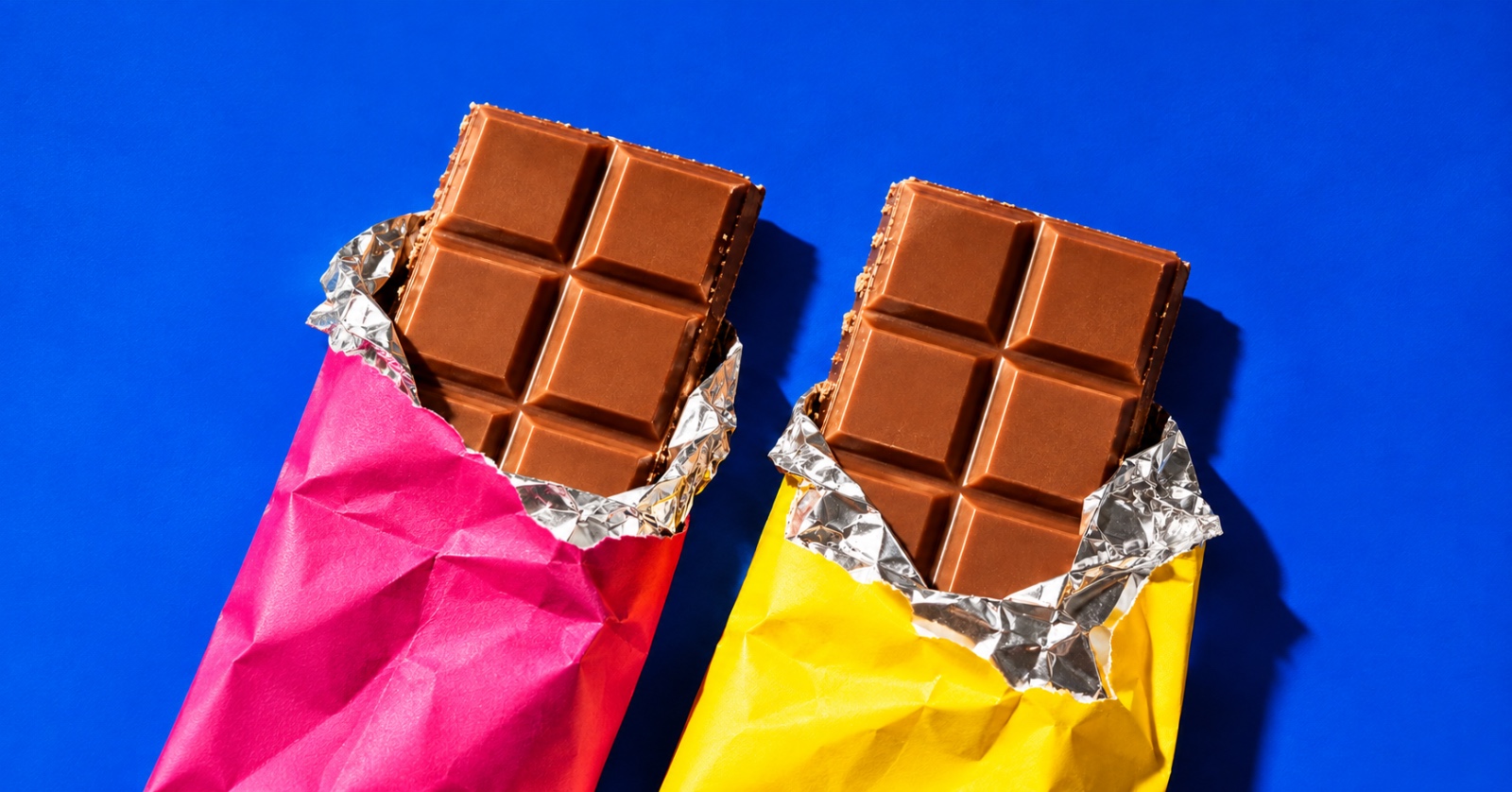
Imagine two versions of the same chocolate bar. One comes in a brightly coloured wrapper with soft lettering and an illustration of milk. The other has restrained typography and a prominent cocoa percentage. Even with no knowledge of either brand, a shopper has material from which to form expectations. The first presentation could suggest sweetness and comfort; the second might encourage them to anticipate a more bitter flavour.
Those expectations matter because eating is an act of interpretation. We notice particular qualities, compare them with what we expected and decide whether the experience is satisfying. The packaging can help establish the standard against which the food is judged.
This also explains why describing a pack as “appetising” is only a starting point. A design might make a product look delicious while suggesting the wrong kind of deliciousness. A dessert that appears rich and indulgent has a different promise to fulfil from one presented as light and refreshing.
What the hands contribute
Food packaging is often approved on a screen, where colour, composition and typography receive most of the attention. Customers eventually encounter a physical object. They lift the bottle, grip the cup, peel back the lid and sometimes continue holding the container throughout the meal.
Research involving identical yoghurt served in bowls of different weights illustrates how these physical details can affect judgement. Participants rated the yoghurt in heavier bowls as denser, more expensive and more likeable. A property of the container had become part of their assessment of its contents.
That finding hardly justifies making every package heavier. It does suggest that a product’s physical presentation deserves to be tested while people are eating, rather than assessed only as an object to admire.
Consider a brand developing an indulgent dessert. Its packaging might look convincing in a presentation, yet feel awkward to hold or make the last spoonful difficult to reach. These are part of the experience the customer takes away. Visual appeal cannot tell a team everything it needs to know about how a product will be received.
The risk of looking too good
There is an obvious temptation to use packaging to raise expectations as high as possible. More richness, more freshness, more pleasure. But a higher expectation also gives the product more to live up to.
Experiments with coloured coffee cups have shown how this can go wrong. When the cup suggested a flavour experience that did not fit the coffee, people liked the drink less. In one pairing, an acidic coffee served in a pink cup was perceived as even more acidic. The presentation had made an unexpected characteristic harder to ignore.
A similar problem is easy to imagine in a supermarket. A lightly sweetened drink dressed like a sugary treat may disappoint someone who would have enjoyed it with a clearer idea of what they were buying. An assertively bitter chocolate could struggle in a wrapper that suggests a mild, creamy bar.
The practical implication is that packaging needs to attract the right appetite. A design should give people a useful sense of the pleasure on offer. Trying to make every product look sweeter, richer or more luxurious can obscure the qualities that make it worth choosing.
A redesign deserves a taste test
Brands routinely ask whether new packaging stands out, communicates clearly and feels recognisable. It would also be useful to ask how the product tastes in it.
That requires a different kind of testing. Showing someone a proposed design and asking whether they like it measures their response to the design. Serving the product with the packaging present allows a team to investigate the combined experience.
A blind tasting can establish how people respond to the formulation. A tasting with the pack visible can reveal what the presentation contributes. Comparing the two could help a brand understand whether a redesign supports the product, makes little difference or creates expectations it cannot meet.
Specific questions matter here. “Which do you prefer?” gives a team a winner. Asking about sweetness, intensity, texture and overall enjoyment gives it something to work with. A pack that makes a drink seem stronger may be successful for one audience and counterproductive for another.
The same care applies to familiar products. If customers say a drink tastes different after a redesign, pointing to an unchanged ingredient list may not fully address their experience. The company has preserved the formulation while changing something the customer encounters alongside it.
Packaging can help people enjoy the same product more. It can also interfere with qualities they previously liked. The most useful starting point for a designer is therefore a tasting: understand what makes the food enjoyable, decide what someone should reasonably expect, and build a package that fits that experience.