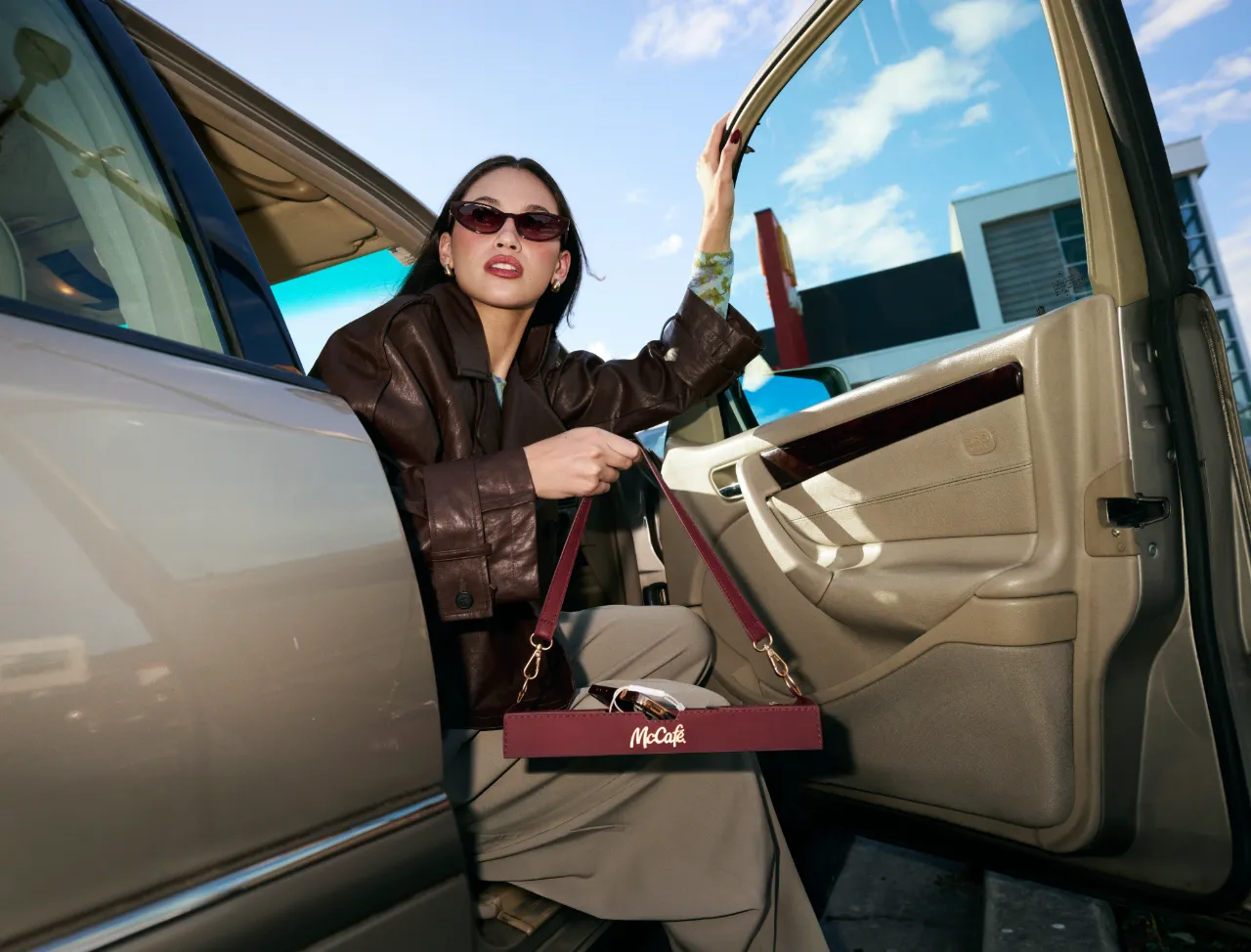
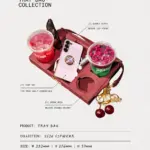
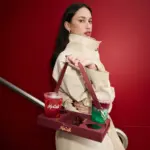
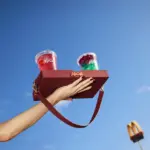
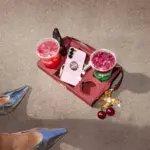
McDonald’s Australia has released a limited-edition handbag modelled on the most disposable object in its restaurants: the four-cup cardboard drinks tray. The McCafé Tray Bag, made with Wieden+Kennedy Sydney, comes in vegan leather in a “fig” colourway, with gold hardware, a chunky shoulder strap and a small pocket sized for a lip gloss or a straw.
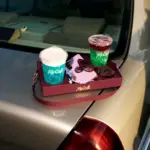
It also works. The bag keeps almost identical measurements to the original tray, down to the stabilising tabs inside the cup holders, and is built to carry four drinks securely. The team went through several prototypes to get the strap attachments to hold.

Where the idea came from
W+K Sydney creatives Hannah Lawson and Jessica Beal traced the concept back to social media, where fans had been posting themselves carrying McDonald’s drinks trays like handbags. The agency did not invent the joke. It noticed one its audience was already telling and gave it a gold clasp.
That origin matters. Brands have spent the past few years trying to manufacture moments that feel native to TikTok and Instagram. Lifting a behaviour customers already perform publicly is a faster route, because the audience has done the creative testing for free.
Why a bag, and why now
The drop is a promotional vehicle for what McDonald’s Australia calls its biggest beverage launch since McCafé arrived in the country more than 30 years ago. The new menu includes an Iced Tiramisu Latte with Cold Foam, a Red Bull Strawberries & Cream Energiser and a new Affogato.
Specialty iced drinks are where quick-service chains are fighting for younger customers, and the category leans heavily on how a cup looks in a photo. A bag that makes carrying four of those drinks look like a fashion choice is an advertisement for the menu that customers wear into the street.
The rollout is built for scarcity. One hundred bags went on sale through a dedicated microsite from 9 October, influencers including Riley Hemson received early units, and a wider exclusive drop arrives on the mymacca’s app from 14 October. Routing the second wave through the app turns a merch moment into a reason to download, and keeps customer data inside McDonald’s own channels.
Photographer Sarah Adamson of Photoplay shot the campaign as a fashion editorial, a deliberate signal that the bag is meant to sit alongside designer accessories in a feed rather than next to a burger.
“It turns an everyday essential into a statement piece,” said Tobi Fukushima, marketing director of menu at McDonald’s Australia.
What this tells us
Fast food merchandise used to mean branded t-shirts handed out at events. It now runs on the same mechanics as streetwear: tiny quantities, influencer seeding, editorial photography and an app-gated release. The McCafé Tray Bag suggests the most effective product ideas for heritage brands may already be sitting in their customers’ posts, waiting for someone at the agency to scroll far enough.
Credits: McDonald’s Australia; Wieden+Kennedy Sydney, Akcelo, Digitas (agencies); Photoplay (production); Sarah Adamson (photography); The Editors (post/VFX); Eleven (PR); CREATE (consultancy); OMD Australia (media).