For years, paper was treated like something technology would eventually make unnecessary. Email would replace letters. Screens would replace print. Digital publishing would make physical books and magazines feel inefficient, expensive and old-fashioned.
Instead, something stranger happened. The more digital our lives became, the more certain physical objects started to feel valuable.
That shift is becoming especially visible now, as generative AI makes digital content faster, cheaper and almost limitless. Images, copy, layouts and ideas can be produced in seconds. The result is abundance, but also fatigue. When everything can be generated, duplicated and endlessly revised, weight, texture, finish and permanence begin to feel unusually rare.
Paper suddenly has an advantage.
Its appeal is partly sensory. You can feel the difference between stocks, notice the grain, see how light hits an embossed surface or how ink behaves on a particular finish. None of those qualities can be reduced to a thumbnail on a screen. For brands, those small physical details can communicate care before a customer has read a single word.
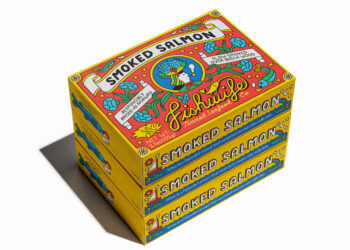
That is one reason paper is finding a renewed role in luxury packaging, publishing and brand identity. Material choice is increasingly becoming part of the story a product tells. Custom colours, unusual fibres, embossing, varnishes and carefully selected weights can turn packaging into something people want to keep rather than immediately discard.
Paper technology itself has evolved along the way. Manufacturers are experimenting with recycled fibres, cotton, hemp, sugarcane by-products and new functional treatments designed to reduce the need for plastic laminates. Some papers can even incorporate waste material from a brand’s own production process, giving the material a provenance that digital surfaces cannot easily imitate.
That matters as sustainability becomes a bigger part of luxury design. A 2025 Bain & Company study found that half of luxury packaging leaders expected sustainable solutions to account for more than 30% of luxury packaging sales within three years. Material decisions are increasingly tied to both environmental expectations and the way customers perceive quality.
There is also a quieter form of exclusivity at work. Bespoke stationery, limited print editions and beautifully produced books now carry a kind of status precisely because they require more effort to make. A digital file can be copied perfectly and infinitely. A physical object has to be printed, bound, transported and stored. Its limitations are part of its appeal.
Creative teams often understand this instinctively. Many still begin with pencil and paper because rough marks encourage experimentation. A sketch looks unfinished, which makes it easier to change. Digital work can become polished too quickly, creating the illusion that an idea is further along than it really is.
The same principle applies to finished brand experiences. A carefully chosen paper stock can do work that typography or photography alone cannot. It gives an identity a physical character. The grain, colour and thickness become part of how the brand is remembered.
Luxury fragrance house Penhaligon’s offers one example through packaging built around a bespoke paper shade known as William’s Green. The material creates consistency across the range, but it also gives the brand something difficult to reproduce digitally: a specific tactile experience attached to the product itself.
This is where the old distinction between analogue and technology starts to feel less useful. Paper manufacturing is increasingly technical, while digital designers are paying closer attention to craft, material and physical production. New technology does not necessarily eliminate older media. Often, it changes what they are for.
Vinyl did not disappear when music became streamable. Film photography survived the rise of digital cameras. Printed books continue to coexist with screens. Once convenience moves elsewhere, physical media can become more intentional.
Paper seems to be following the same path.
Its future may have less to do with being the cheapest or fastest way to carry information. Its value increasingly comes from everything digital media struggles to reproduce: touch, weight, imperfection, provenance and the sense that someone chose to make an object worth keeping.
In a world overflowing with pixels, paper is becoming powerful precisely because it takes up space.