Meta spent years betting that the future of computing would be something we entered through a headset. Its latest idea is considerably smaller: an AI companion roughly the size of an AirPods case that can hang from a keychain.
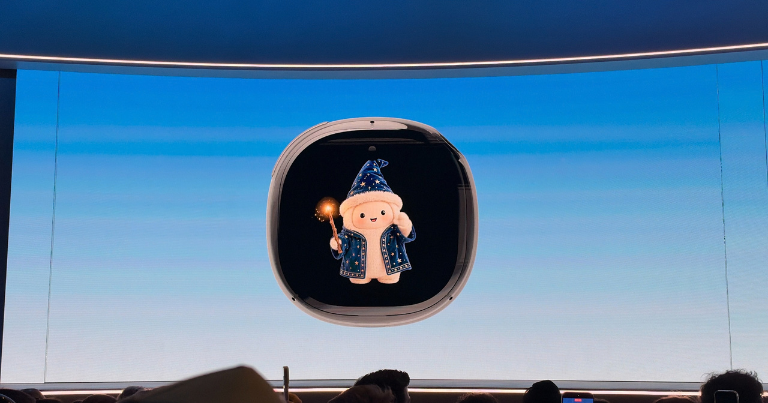
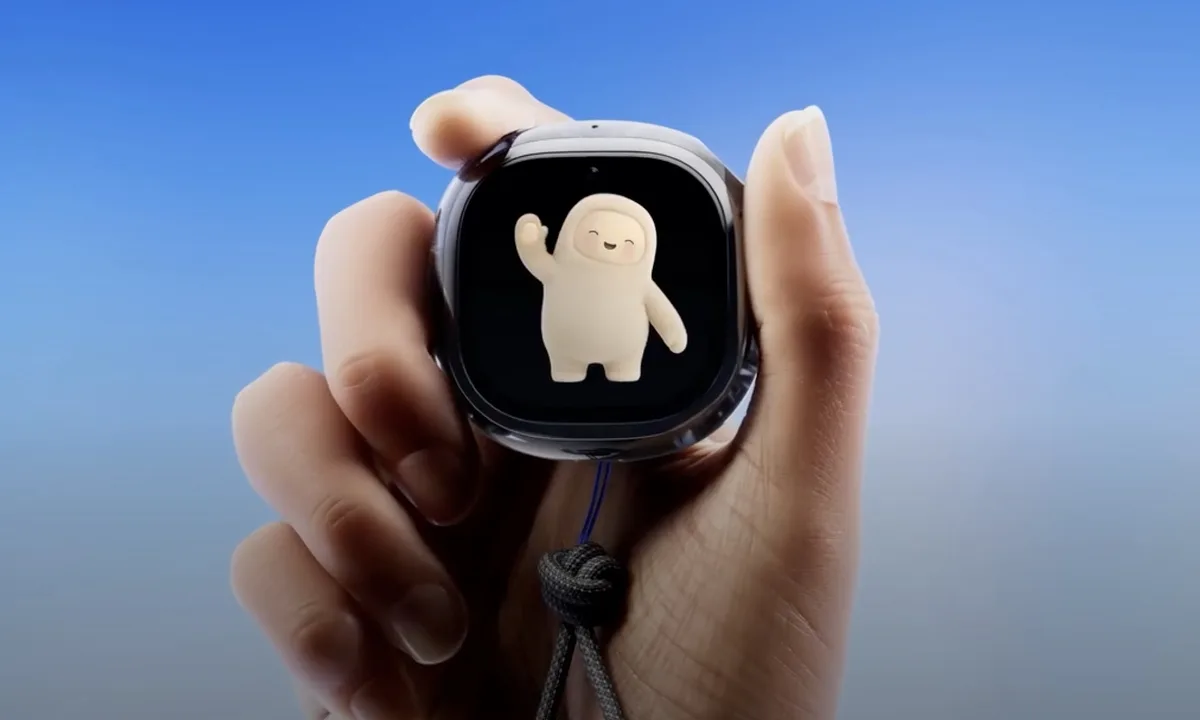
Unveiled at Meta Connect, Muse Charm is a pocket-sized device built around Muse, the company’s recently launched personal AI agent. It has a roughly two-inch touchscreen, built-in 5G connectivity and a customizable character at its center. Users can access Muse without opening an AI app on their phone, giving Meta a dedicated piece of hardware through which its assistant can follow them into everyday life.
Mark Zuckerberg described the device as a way to fit the full Muse experience, including real-time voice and its avatar system, into something small enough to carry anywhere. Meta says Charm should be ready to ship in December, although pricing has not yet been announced.
The gadget is small, but the ambition behind it is much larger. Meta has spent years trying to reduce its dependence on Apple and Google, whose operating systems control much of the mobile experience. A successful AI device would give Meta another route to users, one that does not begin with opening an app on an iPhone or Android phone.

It also reflects how dramatically Zuckerberg’s vision of the next computing platform has shifted. The metaverse once occupied that position. Now he is putting “personal superintelligence” at the center of Meta’s strategy, arguing that it will arrive sooner and prove more consequential. Muse is also expected to spread across Meta’s smart-glasses lineup, suggesting that Charm is one piece of a broader attempt to make AI permanently accessible rather than something users consciously launch.
Charm’s design is unusually playful for a device carrying such large ambitions. Its small screen centers on a customizable Muse character, giving it more in common visually with a digital companion than a conventional smartphone. Analysts have already compared the concept to Tamagotchi, the virtual pets that became a late-1990s phenomenon.
That may be deliberate. Younger users already interact with AI through voice, chat and conversational interfaces in ways that can feel closer to an ongoing relationship than a traditional search query. A device that turns an AI assistant into something physically present could appeal to people who see AI as a brainstorming partner, organizer or companion.
It could also offer an alternative for consumers who are curious about wearable AI but reluctant to put cameras on their faces. Meta has invested heavily in smart glasses, yet privacy concerns remain one of the biggest obstacles facing the category. Charm offers a different form factor, although it still has to prove why anyone needs another device when a phone can already run the same assistant.
That question has already hurt other AI hardware experiments. Rabbit’s R1 arrived with enormous attention in 2024, only to struggle after its capabilities failed to live up to expectations. The broader category has repeatedly discovered that separating AI from the smartphone is easy to demonstrate and much harder to justify in everyday use.
Muse gives Meta one advantage those earlier devices lacked: the assistant already has momentum. It launched earlier this month and quickly drew millions of downloads, while investor enthusiasm around Meta’s agentic AI strategy has grown rapidly. Muse is designed to perform tasks such as shopping, travel booking and sending emails, moving the assistant beyond question-and-answer chat toward actually doing things for the user.
The Charm therefore feels less like a standalone gadget launch and more like a test of a larger idea. If AI assistants become a constant layer in daily life, the smartphone may eventually be an awkward place to keep them. Tech companies are now experimenting with glasses, pendants, recorders and other objects in search of a form that makes AI feel more immediate.
Meta thinks that form might be something you carry beside your keys.
Whether people will want another object in their pockets is the part no keynote can answer.