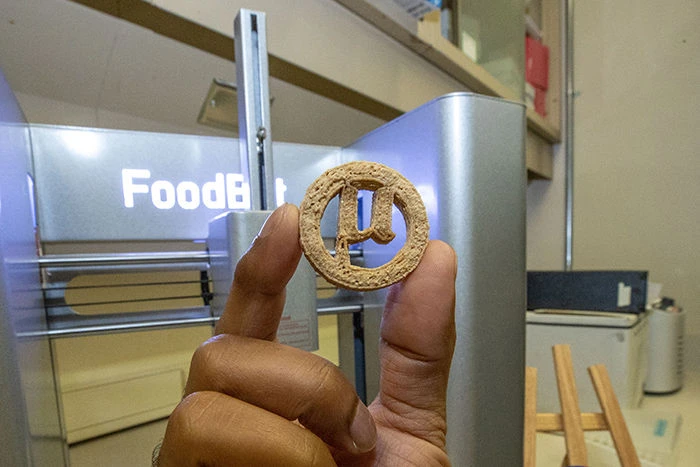
A lab at Southern Illinois University Carbondale has built a pipeline that turns discarded PET soda bottles into a cookie that tastes faintly of vanilla. Biochemist Lahiru Jayakody’s team presented the work this week at the American Chemical Society’s fall meeting in Chicago, with the research published in Trends in Biotechnology. The product, called µBites, began as an entry in NASA’s Deep Space Food Challenge, aimed at feeding astronauts on long missions where fresh food is scarce but packaging waste isn’t.
The process starts by shredding PET plastic and mixing it with agricultural leftovers like corn stalks. A technique called oxidative hydrothermal dissolution, developed with SIU geologist Ken Anderson, uses oxygen and water at high heat and pressure to break both down into carbon fragments microbes can feed on. Engineered yeast takes it from there: one strain of Saccharomyces cerevisiae converts ferulic acid from the plant matter into vanillin, the compound behind vanilla’s flavor, while a separate strain evolved in the lab turns ethylene glycol, a PET byproduct, into beta-carotene, a vitamin A precursor. Fiber, starch, and sweetener get blended in, a 3D printer shapes the dough, and a microwave step hardens it. The current process converts more than half the feedstock’s carbon into usable food material per batch.
The motivation is food security as much as plastic waste. Global food demand is projected to rise 35 to 56 percent by 2050, with close to 30 percent of the world’s population facing potential food insecurity. A system that manufactures protein and vitamins from plastic and crop residue, both abundant, sidesteps land and water limits that conventional farming can’t.
It’s not the first plastic-to-vanilla trick. In 2021, University of Edinburgh researchers engineered E. coli to convert a different PET breakdown product straight into vanillin, exploiting how similar the two molecules already are. That work stopped at the flavor compound; Jayakody’s lab builds a full food product around the same kind of chemistry.
µBites hasn’t been tasted by a human yet. The team is running digestion simulations and screening for toxins and pathogens while it awaits approval for real taste tests. For now the likely audience is submarines, disaster response, and eventually off-world bases, not supermarket shelves; some estimates put production costs around 60 dollars per kilogram. A consumer version, if it happens, is still years away.