mrktr
  • Home
  • News
  • Brands
  • Talent
  • Culture
  • Tech
No Result
View All Result
Marketer
  • Home
  • News
  • Brands
  • Talent
  • Culture
  • Tech
No Result
View All Result
mrktr
No Result
View All Result
Scientists turned plastic bottles into vanilla cookies

Scientists turned plastic bottles into vanilla cookies

August 24, 2026
in News, Tech
Reading Time: 2 mins read
A A
Share to Facebook

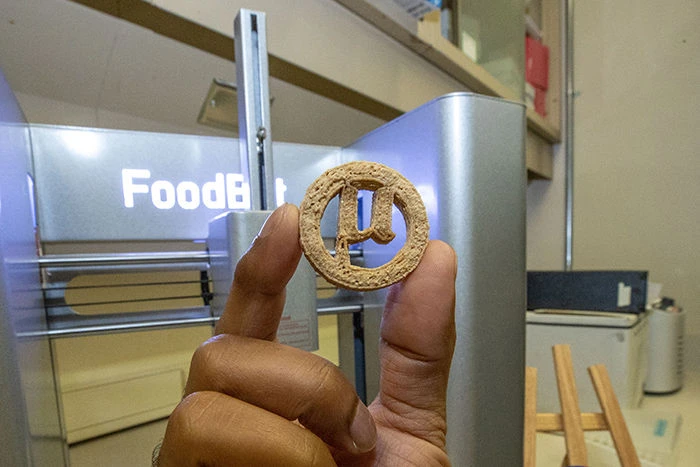
A lab at Southern Illinois University Carbondale has built a pipeline that turns discarded PET soda bottles into a cookie that tastes faintly of vanilla. Biochemist Lahiru Jayakody’s team presented the work this week at the American Chemical Society’s fall meeting in Chicago, with the research published in Trends in Biotechnology. The product, called µBites, began as an entry in NASA’s Deep Space Food Challenge, aimed at feeding astronauts on long missions where fresh food is scarce but packaging waste isn’t.

The process starts by shredding PET plastic and mixing it with agricultural leftovers like corn stalks. A technique called oxidative hydrothermal dissolution, developed with SIU geologist Ken Anderson, uses oxygen and water at high heat and pressure to break both down into carbon fragments microbes can feed on. Engineered yeast takes it from there: one strain of Saccharomyces cerevisiae converts ferulic acid from the plant matter into vanillin, the compound behind vanilla’s flavor, while a separate strain evolved in the lab turns ethylene glycol, a PET byproduct, into beta-carotene, a vitamin A precursor. Fiber, starch, and sweetener get blended in, a 3D printer shapes the dough, and a microwave step hardens it. The current process converts more than half the feedstock’s carbon into usable food material per batch.

The motivation is food security as much as plastic waste. Global food demand is projected to rise 35 to 56 percent by 2050, with close to 30 percent of the world’s population facing potential food insecurity. A system that manufactures protein and vitamins from plastic and crop residue, both abundant, sidesteps land and water limits that conventional farming can’t.

It’s not the first plastic-to-vanilla trick. In 2021, University of Edinburgh researchers engineered E. coli to convert a different PET breakdown product straight into vanillin, exploiting how similar the two molecules already are. That work stopped at the flavor compound; Jayakody’s lab builds a full food product around the same kind of chemistry.

µBites hasn’t been tasted by a human yet. The team is running digestion simulations and screening for toxins and pathogens while it awaits approval for real taste tests. For now the likely audience is submarines, disaster response, and eventually off-world bases, not supermarket shelves; some estimates put production costs around 60 dollars per kilogram. A consumer version, if it happens, is still years away.


Tags: biotechnologycircular economyfood securitynasaplastic recyclingsustainabilitysynthetic biology
Share1Share6
Previous Post

McDonald’s made toys for dogs

Next Post

He spent decades shaping objects most of the world touches every day

Related Stories

Helsinki Design Week 2026 opens with a theme built around strangers

Helsinki Design Week 2026 opens with a theme built around strangers

by David Keke
August 28, 2026
0

  Helsinki Design Week opens today, August 28, and runs through September 6 under a theme that sounds more like a philosophy seminar than a festival tagline: The...

GTA 6 crashed the Internet, before anyone’s even played it

GTA 6 crashed the Internet, before anyone’s even played it

by Qetia
August 28, 2026
0

Rockstar dropped 27 minutes of extended gameplay footage this week. The footage is the deepest look yet at Vice City and the new Leonida state, following protagonists Lucia...

Everyone Sued OpenAI. Why Has No One Sued Anthropic?

Everyone Sued OpenAI. Why Has No One Sued Anthropic?

by Qetia
August 27, 2026
0

Every major AI firm has either licensed publisher content or been dragged to court over it. Anthropic somehow avoided both, and media executives say it comes down to...

Someone built the house 25-year-olds can actually afford

Someone built the house 25-year-olds can actually afford

by David Keke
August 26, 2026
0

In Stockholm, the average 25-year-old can afford roughly 1.9 square metres of housing today. That's smaller than most parking spaces. To make that number impossible to shrug off,...

Next Post
He spent decades shaping objects most of the world touches every day

He spent decades shaping objects most of the world touches every day

mrktr

Independent media for the new generation of marketers, creators, and thinkers.
MRKTR | born in London, inspired by the world.

Follow us

Recent Posts

McDonald’s Just Put Video-Game Food on Its Real Menu

McDonald’s Just Put Video-Game Food on Its Real Menu

August 27, 2026
Yayoi Kusama and the Endless Room

Yayoi Kusama and the Endless Room

August 27, 2026

Weekly Newsletter

  • Home
  • Advertise
  • Marketer.ge
  • Privacy Policy

© 2026 mrktrg

No Result
View All Result
  • Home
  • News
  • Brands
  • Talent
  • Culture
  • Tech

© 2026 mrktrg

This website uses cookies. By continuing to use this website you are giving consent to cookies being used. Visit our Privacy and Cookie Policy.