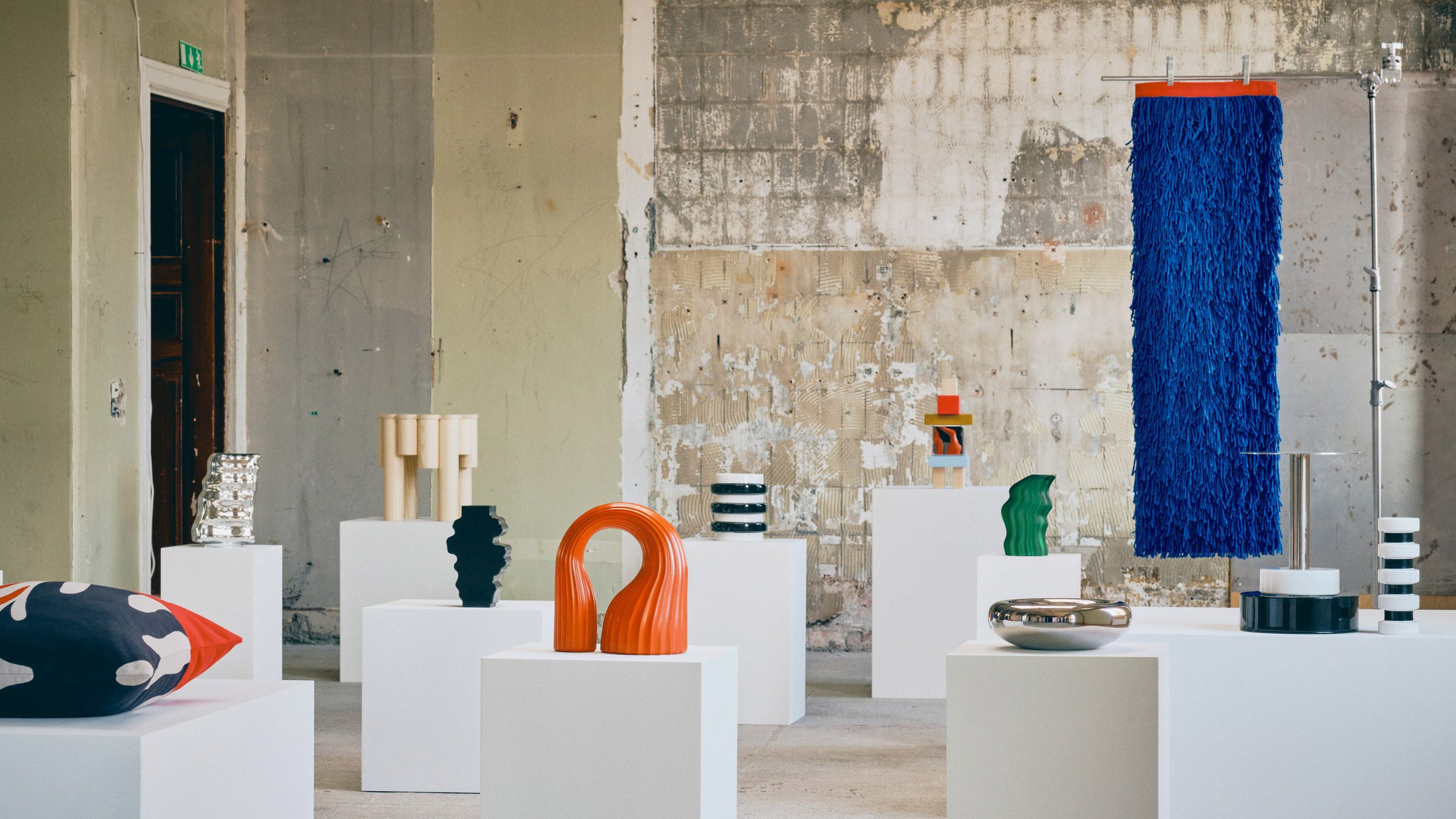
Ikea has never pretended to be a gallery. Its business is built on flat-pack efficiency, not white walls and artist statements. Yet on August 19, the Swedish retailer opened the doors on Konstrunda, a 22-piece collection of vases, stools, side tables, rugs and sculptural objects designed by seven creators, with prices running from $20 to $300.
What ikea actually launched
Konstrunda, roughly “art tour” in Swedish, brings together a deliberately mixed group: London-based product designer Andu Masebo, Italian architect Emanuele Stamuli, Swedish artist Lisa Reiser, Swedish designer Lisa Hilland, design partners Ingrid Leander Berg and Igor Holtermann, and Akanksha Deo, a visual artist working inside Ikea’s own studio. Creative leader Karin Gustavsson briefed the group with three words: liberated, happy, fearless. “Art should be available for all to enjoy, not a luxury reserved for galleries,” she said, adding that Ikea can “bring distinctive art objects into people’s homes at a scale very few others can.”
Can an ikea product become a collectible?
That line raises a question worth sitting with: can a mass-produced Ikea object ever become collectible design in its own right? History suggests yes. Vintage Ikea pieces already fetch striking sums at Swedish auction houses. Gustavsson has pointed to exactly this in past interviews, noting that while Ikea is synonymous with mass production, certain objects were made in limited runs and have quietly appreciated for decades.
Konstrunda leans into that same scarcity. The collection won’t be sold indefinitely, which gives it a built-in sense of exclusivity, but Gustavsson has been clear that affordability was the point from the start. “It is not difficult to create an expensive work of art,” she has said. “Making it accessible is a much greater challenge.” That is where she sees the collection’s real potential: as a young person’s first encounter with owning art. Someone who grew up without a single artwork at home might buy Lisa Hilland’s orange ceramic sculpture simply because, for once, they can afford it. They may never spend €600 at a gallery, but a €20 object could be the starting point, a way into discovering the designers and architects behind it and realising, as Gustavsson put it, that “this can be a job too. This is also a profession.”
From beige interiors to a signature of your own
The more revealing shift may not be about art at all, but about how people are treating their homes. Interiors used to default to neutral and beige. Today, particularly among younger buyers, that has given way to experimentation: mixing vintage finds with new pieces, running Ikea hacks, arranging objects in deliberately unexpected ways. Konstrunda is built for that instinct rather than against it, offering pieces designed to be mixed, hacked and rearranged rather than bought as a matching set.
What happens next
Ikea has run limited collaborations before, from its rotating PS collection to the 2019 Off-White drop with Virgil Abloh and a 2024 collection with Gustaf Westman that sold out within hours and lit up TikTok. Konstrunda pushes that playbook further by calling the result art rather than a collaboration, and betting that most shoppers won’t draw a sharp line between an original and an affordable reproduction. If it performs the way those earlier drops did, expect some pieces to trade above retail within months, and expect Ikea to keep returning to this idea rather than treating it as a one-off.