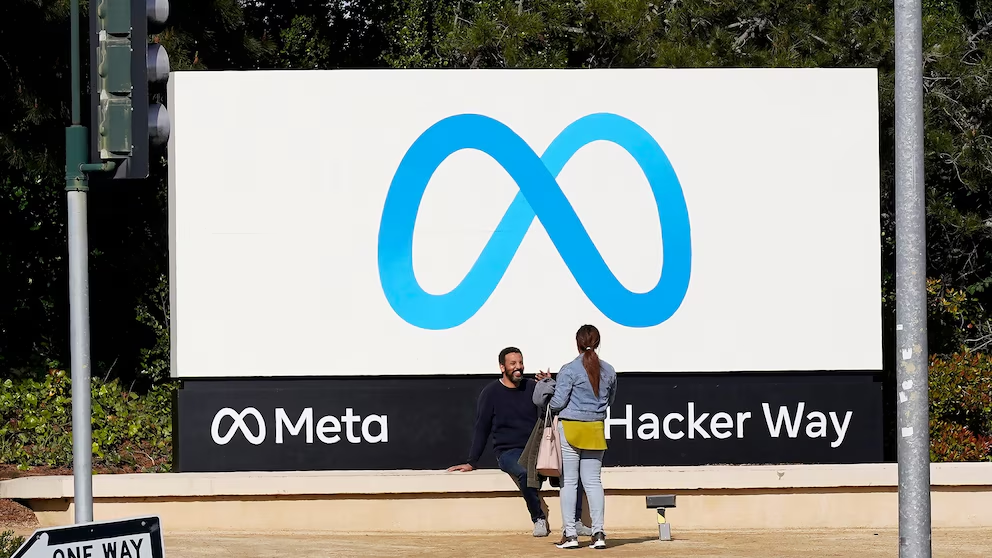
Meta’s child safety reckoning goes to trial as 29 US states demand platform changes
A trial that opened this week in a California federal court could reshape how hundreds of millions of teenagers use Instagram and Facebook. Twenty-nine US states, representing roughly two-thirds of the country’s population, are suing Meta over what they allege was a deliberate strategy to keep children hooked on its platforms while concealing the psychological harm involved.
The 2023 lawsuit does not just seek financial damages. It asks the court to force Meta to eliminate “like” counts, end infinite scroll and autoplay, restrict beauty filters, require parental verification for teen accounts, and remove ephemeral content like Instagram Stories. Kentucky Attorney General Russell Coleman compared the effort to the 1990s tobacco settlement and the opioid litigation that followed it.
The case builds on a New Mexico ruling earlier this year, in which Judge Bryan Biedscheid fined Meta $942m and labeled the company a “public nuisance,” comparing its platforms to a polluting factory. That order already restricts like counts for minors and limits notification hours within the state. A verdict against Meta in the broader case, presided over by Judge Yvonne Gonzalez Rogers, would extend similar obligations nationwide.
Central to the states’ argument is Meta’s own internal research, which reportedly found that engagement features drive “social comparison” among teenagers, linked to loneliness and negative body image. Court testimony from a young plaintiff, who won a related suit against Meta earlier this year, described creating dozens of accounts at age nine specifically to inflate likes on her own posts.
Meta has denied the allegations, saying it remains committed to protecting young users. But the financial and structural stakes are significant: the company’s market value sits near $1.5 trillion, and features like autoplay and disappearing posts are core to how it keeps users engaged.
Whatever the verdict, the trial signals a broader shift. Regulators and courts are increasingly treating platform design itself, not just content moderation, as the point of legal exposure for social media companies.