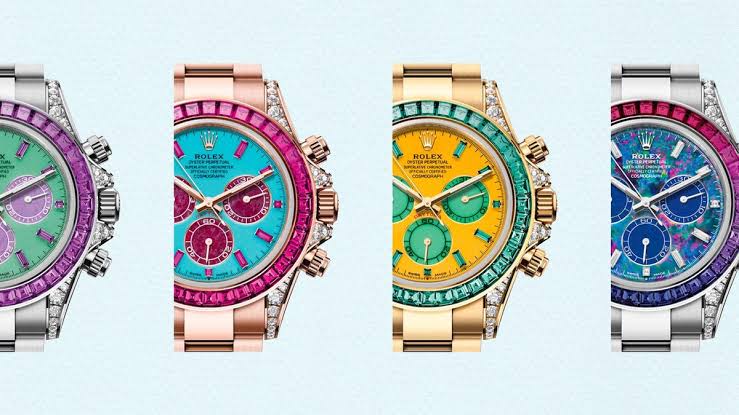
Rolex has interpreted spring, summer, autumn and winter in the language it knows best: precious metals, rare stones and the Cosmograph Daytona.
For The Four Seasons, the Swiss watchmaker has created four unique versions of its most famous chronograph, each designed around the colors and materials of a different season. None will enter regular production. On September 28, all four will be auctioned individually by Phillips in London, with proceeds going to the Federer Foundation and conservation organization Re:wild. It will also mark Rolex’s first charity auction of this kind.
The watches share the familiar 40mm Daytona architecture, but visually they move far beyond the model’s motorsport roots.
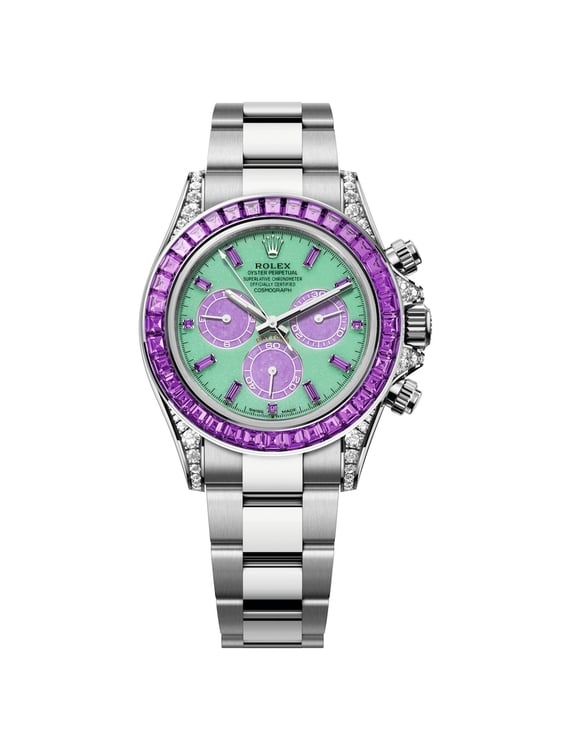
Spring comes in 18-carat white gold with a pale green chrysoprase dial and purple lepidolite counters. Thirty-six trapeze-cut purple sapphires circle the bezel, with more sapphires taking the place of conventional hour markers. Diamonds cover the lugs and crown guards, creating a palette that feels closer to early blossoms than a racing chronograph.
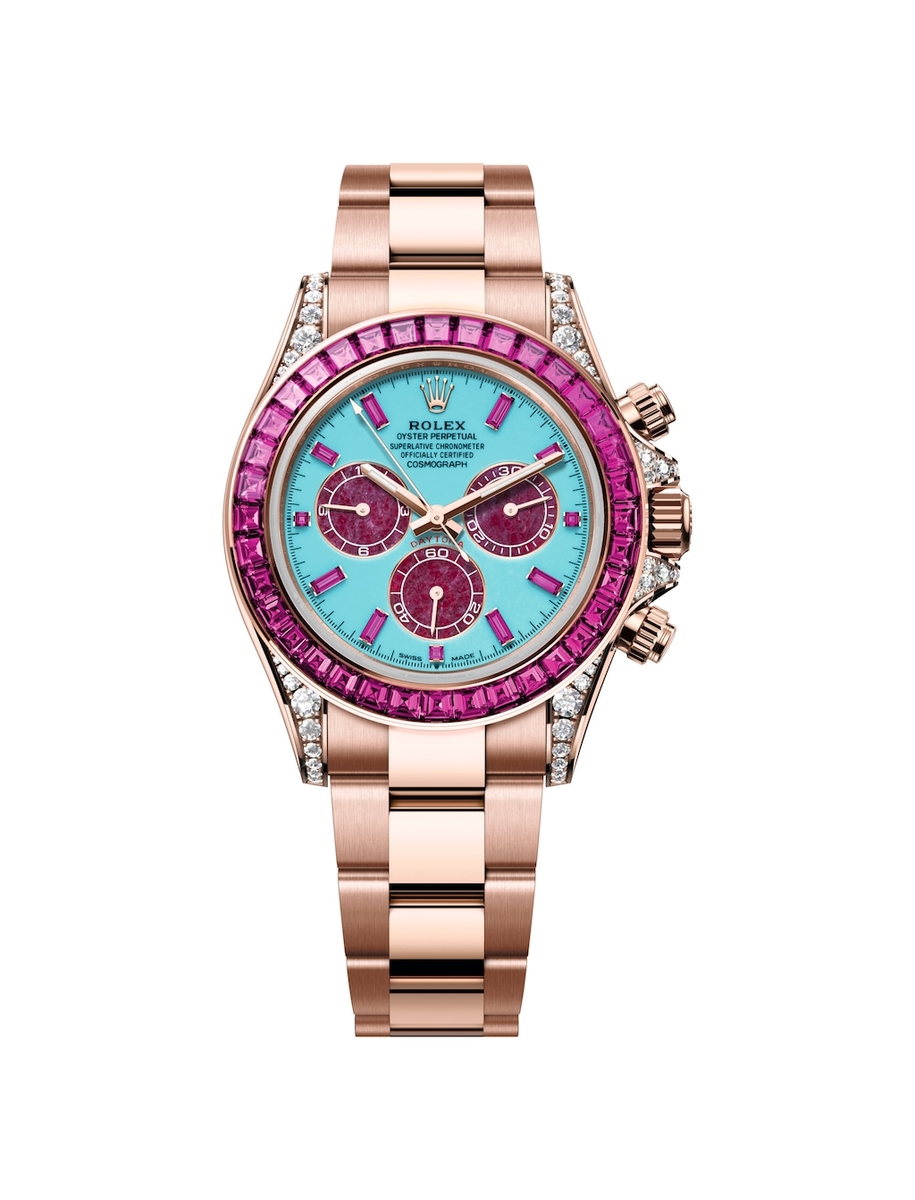
Summer is considerably brighter. Its Everose gold case surrounds a turquoise dial with deep red heart-of-ruby counters, while pink sapphires appear around the bezel and at the hour positions. The combination is deliberately saturated, giving the watch the almost tropical color intensity associated with some of Rolex’s most collectible gem-set creations.
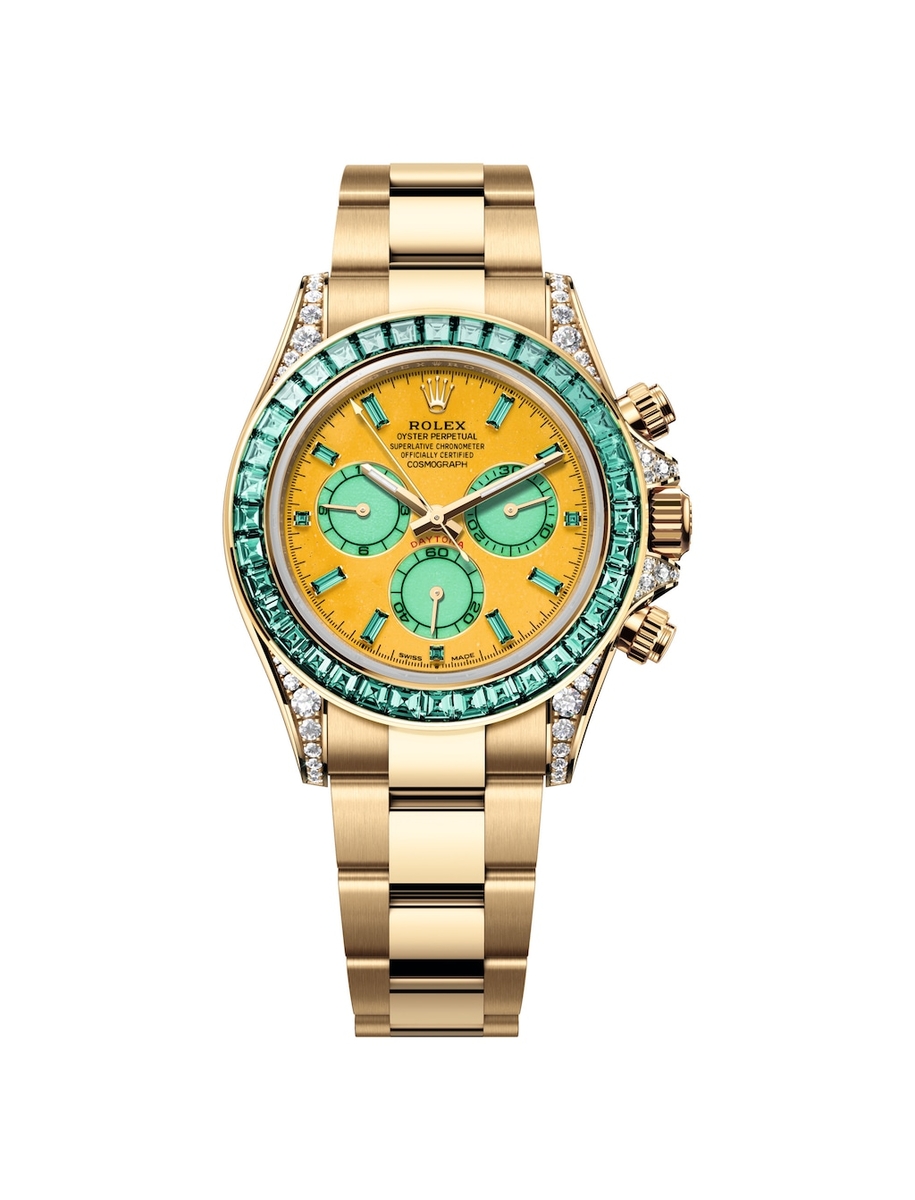
Autumn turns warmer and earthier. Yellow gold is paired with a mookaite dial, whose naturally varied tones are complemented by green chrysoprase counters. A bezel set with 36 green tourmalines completes the composition.
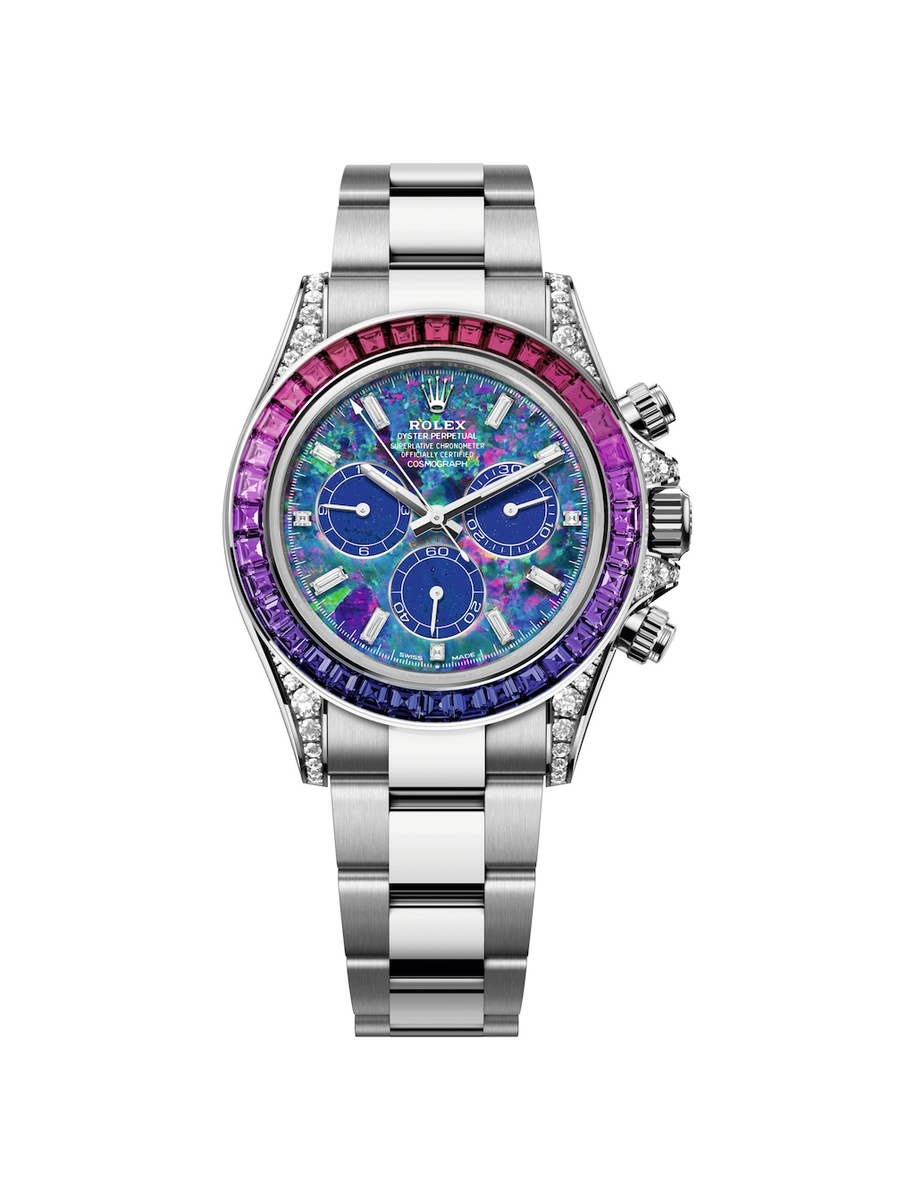
Winter is the coolest and perhaps most dramatic of the four. It is also the only version made in 950 platinum. A blue-opal dial sits alongside lapis lazuli counters, while the sapphire bezel gradually moves from blue into fuchsia. Diamonds replace colored stones at the hour markers, giving the watch a colder, cleaner finish.
Natural-stone dials make the idea particularly fitting. Chrysoprase, turquoise, mookaite, opal and lapis lazuli all vary naturally, meaning even without their official one-off status, no two dials could ever look completely identical.
Underneath the spectacle, the four watches remain Daytonas. Each is powered by Rolex’s automatic calibre 4131, with approximately 72 hours of power reserve. Every model carries 54 brilliant-cut diamonds across its lugs and crown guards, while the four bezels together contain 144 trapeze-cut colored gemstones.
The project also places Rolex in unusual territory. The company is famously controlled about scarcity and rarely produces contemporary watches explicitly as unique pieces. That makes the auction particularly intriguing for collectors, especially because Phillips has not published presale estimates.
There is some precedent for what extreme rarity can do to Daytona prices. In 2024, Phillips sold a circa-1994 white-gold “Rainbow” Daytona, believed to be unique and created years before the production Rainbow models, for CHF 5.505 million. The sale set a world auction record for an automatic Daytona.
That result offers context rather than a prediction. The Four Seasons watches come with a different kind of provenance: they were created specifically by Rolex as unique objects, they form a coherent four-watch concept, and they are entering the market through the brand’s own charity initiative.
The beneficiaries give the seasonal theme another layer. Roger Federer’s foundation works primarily on early education programs for children in Southern Africa and Switzerland, while Re:wild, co-founded by Leonardo DiCaprio and conservation scientists, works with local communities and organizations to protect and restore ecosystems. The sale forms part of Rolex’s broader Perpetual Planet Initiative.
For collectors, however, September 28 will also answer a much simpler question: what happens when Rolex makes four Daytonas that can never be made again?