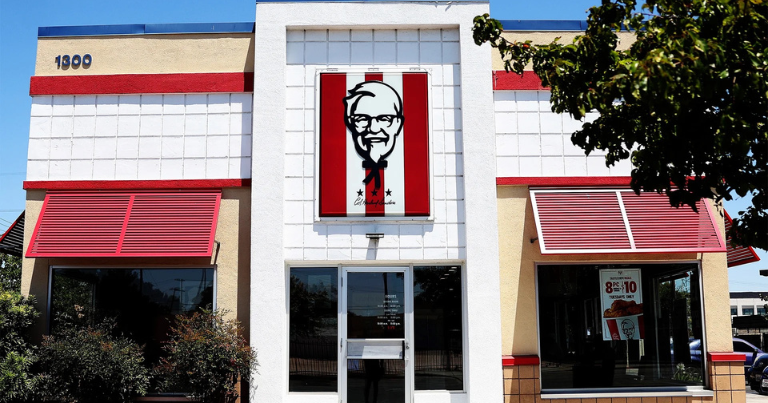
After nearly four decades together, KFC and Pepsi are breaking up.
The fast-food chain will begin replacing Pepsi products with Coca-Cola across its U.S. restaurants, with the transition expected to be completed by spring. On the surface, it is a simple fountain-drink switch. In practice, it ends one of the longest-running relationships in fast food and gives Coca-Cola a particularly symbolic win.
Pepsi’s connection with KFC dates back to 1986, when PepsiCo acquired the restaurant chain. KFC was later spun off with PepsiCo’s other restaurant businesses in 1997 into what eventually became Yum Brands, but Pepsi remained behind the counter. That history makes Coca-Cola’s arrival notable in a way most beverage contracts are not.
For KFC, the move is being positioned as part of its broader “Kentucky Fried Comeback,” an effort to modernize the brand, expand the menu and create more reasons for customers to visit. Beverages are increasingly part of that strategy, with the chain looking beyond the standard soda order toward new drinks, food pairings and options for different times of day.
The economics help explain why the decision matters. Fountain drinks are among the highest-margin items on a fast-food menu. Syrup and carbonated water cost relatively little compared with the price of the finished drink, which means beverage agreements across thousands of restaurants can carry substantial financial value.
But these contracts extend well beyond the margin on a cup of soda. Beverage companies can contribute marketing support, equipment, promotional funding, product development and access to a broader portfolio of brands. For a restaurant chain trying to revive traffic and refresh its image, the right drinks partner can become part of the larger brand strategy.
That makes the timing especially useful for Coca-Cola. The company has recently picked up several notable restaurant and hospitality accounts, including Costco, Marriott and Culver’s. Adding KFC gives Coke another major foodservice presence while taking one away from its biggest rival.
Coca-Cola is not entirely new to the KFC system. The company already supplies the chain in several international markets. KFC Indonesia signed a five-year deal with Coca-Cola in 2019 after PepsiCo ended a bottling arrangement there, while KFC Malaysia made the switch several years later. The U.S. move extends that relationship into one of the brand’s most important markets.
For Pepsi, the loss carries more than financial weight because of its historic connection to the restaurant. Yet beverage contracts regularly change hands, and competition between Coke and Pepsi for large restaurant accounts has always been intense. Losing KFC simply puts another major contract into that continuing battle.
Whether customers will care nearly as much is another question. Previous restaurant beverage switches have sometimes produced a brief increase in traffic before the effect faded. Culver’s and Panda Express, for example, saw modest visitation bumps after changing suppliers, but those gains did not become sustained traffic drivers.
That suggests KFC cannot rely on Coca-Cola alone to fuel its comeback. The switch works best as one piece of a broader attempt to improve the menu and customer experience rather than as a reason for people to suddenly eat more fried chicken.
For Coca-Cola, however, the calculation is larger. Every KFC restaurant becomes another high-volume distribution point, every combo meal becomes a chance to sell a drink, and every menu board puts Coke brands in front of customers at the exact moment they are making a purchase.
After 37 years of Pepsi, that is considerably more valuable than simply changing what comes out of the fountain.