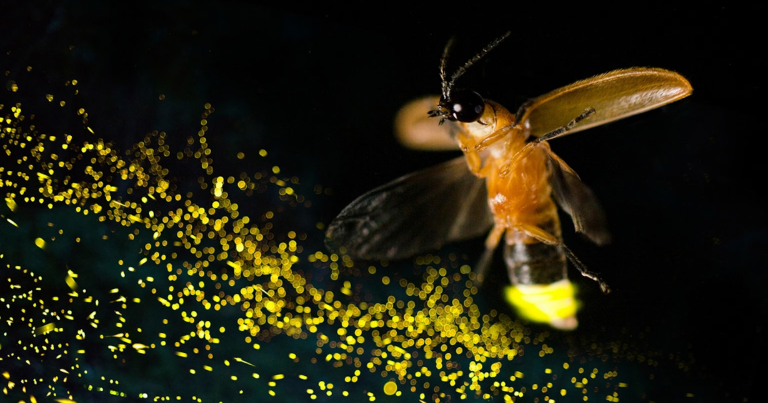
There is a particular kind of childhood memory that barely feels like an event. Standing outside after dinner. Waiting for the garden to grow dark. Seeing a small light appear above the grass, disappear and return somewhere else. Nobody bought a ticket or organised an experience. The fireflies were simply there, part of what summer looked like.
That familiarity makes the thought of losing them difficult to absorb. “We are the last generation to see them” turns an ordinary memory into a possible farewell. It is a powerful sentence, but it goes further than the evidence allows. Scientists have not established that fireflies will disappear worldwide within a generation. What they have documented is serious risk to particular species, alongside substantial gaps in our knowledge of how others are doing.
A 2021 assessment of 132 firefly species in the United States and Canada classified 18 as threatened with extinction. More than half were considered data deficient, meaning there was insufficient information to determine their conservation status. Those findings describe a regional assessment, not a countdown for every firefly on Earth. They nevertheless reveal how much uncertainty surrounds insects that many people assume will always be around.
The loss of a familiar encounter can also happen long before a species becomes globally extinct. Fireflies can disappear from a particular neighbourhood while surviving elsewhere. For the children growing up there, the distinction will be invisible. Their parents may remember evenings full of small flashes; they may know the same place only as a lawn beneath a security light.
This is one reason environmental decline can be difficult to recognise as it happens. A place changes gradually, and each new arrival accepts the version they encounter. Someone who remembers fireflies notices their absence. Someone who has never seen them has no reason to look. Eventually, an ordinary feature of a landscape survives mainly in other people’s stories.
Among the threats facing fireflies, artificial light has an especially direct relationship with what makes them distinctive. Many species use flashes or glows to find mates. Outdoor lighting can interfere with that communication, making their signals harder to detect. Research has found that artificial illumination can reduce mating success, although the effects vary with species, light intensity and the surrounding environment.
What people experience as a decorative glow above the grass can therefore be essential reproductive behaviour. A brightly lit garden may still contain vegetation and apparently suitable space, while making courtship more difficult for the insects living there. The physical setting remains, but the conditions that allow it to function as habitat have changed.
That presents an uncomfortable consideration for the way we design outdoor spaces. Lighting communicates welcome, activity and safety. It makes buildings visible and gardens usable after sunset. Yet the decision to illuminate an entire site, leave lights running all night or light vegetation for decoration also changes that place for animals. Darkness is an ecological condition, and its removal deserves the same attention as changes to soil, water or planting.
The brief adult display is only part of the firefly’s life. Depending on the species, the full life cycle can last one to two years, while adulthood lasts only a few weeks. Much of that earlier life takes place out of sight, in environments such as soil and leaf litter. Protecting the summer spectacle therefore involves caring for places where there may be nothing visibly glowing.
Habitat loss and degradation are major concerns. Many fireflies and the animals they feed on depend on moist conditions, leaving them vulnerable to changes in wetlands, water flows and surrounding land. Development can remove habitat, while drought adds pressure. Pesticides are another concern, potentially affecting fireflies directly or reducing their prey, although research on their precise effects remains limited.
Some of these pressures are connected to habits that appear harmless when considered individually. Clearing away every fallen leaf, cutting every patch of grass short and lighting every corner can produce an orderly garden. Together, those choices can also remove shelter and alter the conditions insects need. A landscape can look carefully maintained while offering less room for other forms of life.
For businesses, property developers and hospitality brands, this makes firefly conservation relevant to everyday design decisions. A sustainability statement has limited practical value if the grounds are managed without considering the species already living there. Where fireflies occur, lighting plans, pesticide policies and the treatment of vegetation all deserve scrutiny. Local ecological advice matters because the requirements of one species or site cannot simply be transferred to another.
There are useful actions at a smaller scale too. The US Fish and Wildlife Service recommends reducing unnecessary outdoor lighting, closing blinds when indoor light spills outside, retaining fallen leaves, planting native vegetation and mowing less frequently. It also encourages alternatives to pesticides. These measures address conditions that people can influence, although protecting threatened populations may require much broader habitat conservation.
For communicators, the challenge is to make that work feel urgent without presenting disappearance as inevitable. “The last generation to see them” attracts attention because it makes the loss personal. It also risks suggesting that the ending has already been decided. A more accurate account leaves room for different species, different places and different outcomes, including those that conservation can improve.
There is already enough at stake without inventing a deadline. A child should be able to encounter a firefly as a living animal in a suitable habitat, rather than only as an illustration, an animation or a story about how summers used to be. Preserving that possibility depends on decisions made well before anyone notices the final flash in a garden.
The next generation’s memories are being shaped by the places we maintain now. Leaving some of those places dark, damp and undisturbed could help ensure that fireflies remain something children discover for themselves.