San Francisco startup Marathon Fusion says it has turned mercury into stable gold, setting what it calls a record ten times higher than CERN’s. The company announced the result on X on Wednesday, saying the experiment took place last month. It has not published data, and no outside lab has verified the claim.
What Marathon says it did
Founded in 2023 by Kyle Schiller and Adam Rutkowski, Marathon develops fuel systems for future fusion power plants. Its backers include Breakthrough Energy, the climate investment network founded by Bill Gates, and Anglo American, the mining group that owns De Beers. It also won a 2023 award from ARPA-E, the US Department of Energy’s research agency.
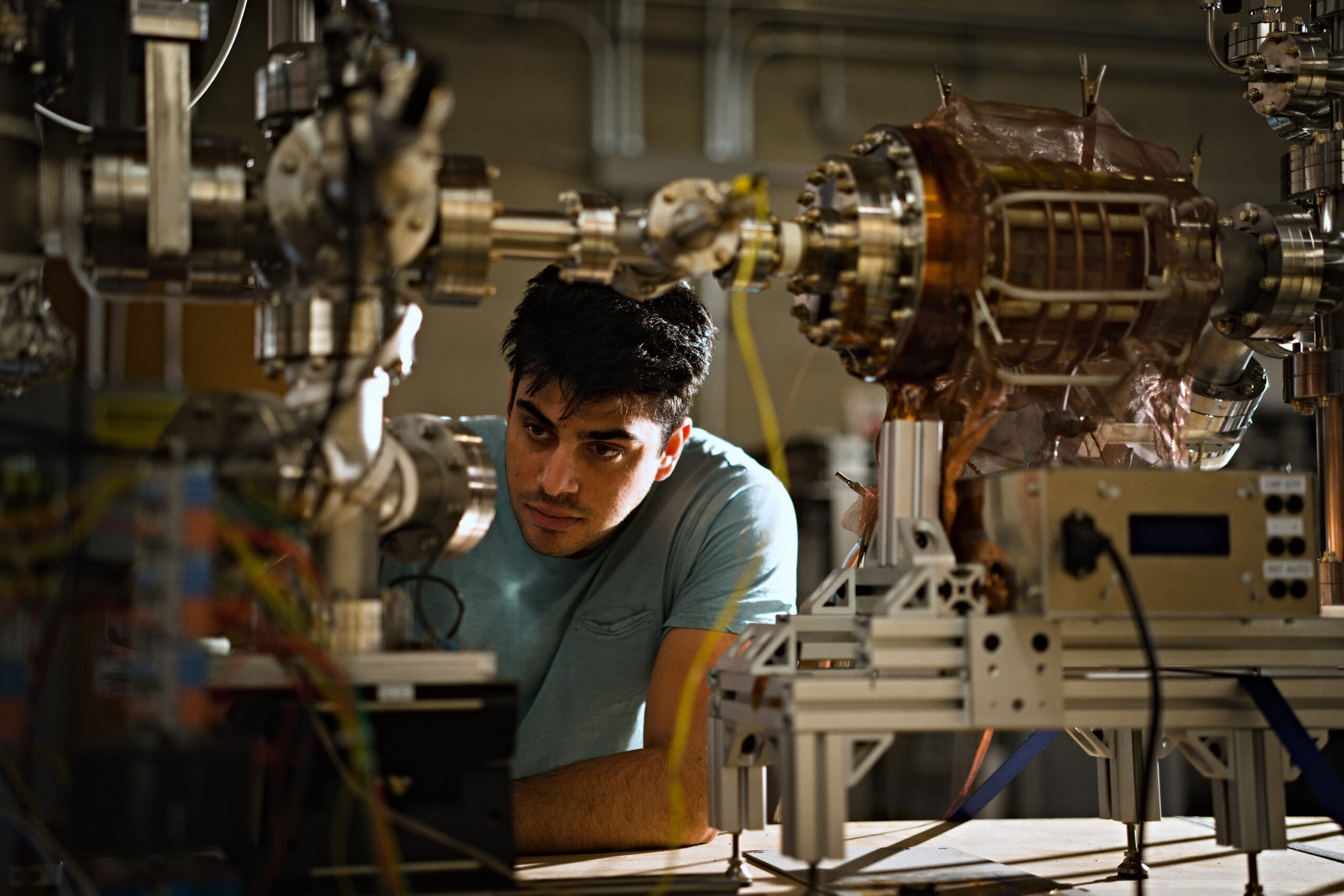
The process is nuclear transmutation. Neutrons from fusion reactions strike mercury-198 and turn it into mercury-197, an unstable isotope that decays into gold-197, the only stable form of gold. Marathon set out the idea in a 2025 study built on computer simulations. This week’s announcement would be its first move from models to a physical result.
For scale, CERN’s Large Hadron Collider produced about 29 picograms of gold during its 2015 to 2018 run, and those nuclei broke apart within a fraction of a second. If Marathon’s tenfold figure refers to quantity, it made less than a billionth of a gram, worth a tiny fraction of a cent at Thursday’s price of $4,062 an ounce.
Why the owner of De Beers is paying attention
Anglo American’s stake gives the story its commercial edge. Lab-grown diamonds, chemically identical to mined stones, pushed wholesale lab-grown prices down 90 to 95% from 2015 levels, according to analyst Paul Zimnisky, and dragged mined prices with them. De Beers launched its own lab-grown brand, Lightbox, in 2018 at $800 a carat and shut it in 2025, a year in which De Beers posted a $511 million underlying loss. Anglo is now reportedly in talks to sell its 85% stake for about $1 billion.
Having watched synthetic stones erode De Beers’ business, Anglo now holds a seat at a company working on synthetic gold.
Gold is far harder to flood than diamonds
Marathon’s 2025 study estimated a fusion plant could produce about 5 tonnes of gold a year per gigawatt. A fleet of 100 such plants would add roughly 500 tonnes a year, about 14% of 2025’s mine output of 3,672 tonnes. Against the roughly 222,600 tonnes mined throughout history, by the World Gold Council’s count, that adds about 0.2% a year to the existing stock. Central banks, which hold gold as a reserve asset and have been buying heavily, also anchor demand in a way the diamond market never had.
The practical limits are steep. No fusion plant sells electricity today, and commercial plants are years away. The company says its gold may contain radioactive isotopes and could need up to 18 years of storage before it could be sold. It has announced no plans to commercialise it.
What to watch next
The immediate test is whether Marathon publishes its data and an independent lab confirms it. The longer question is economic. Speculatively, a valuable by-product could help fusion developers make the case for plants that have yet to deliver a single kilowatt-hour to the grid. If that happens, gold would arrive as a sideline to the energy business, at a pace the market would likely absorb.