Ten years ago, Batumi hosted its first international creative festival. The actual story behind the event started much earlier. For Georgian advertising professionals, the inspiration and experience gathered at European festivals fueled a single ambition: putting Georgia firmly on the global creative map. The industry needed its own center of gravity where competition, professional education, and networking could happen in one shared space.
It took nearly seven years to turn the idea into reality. The initial steps were taken alongside Ukrainian partners. Different goals eventually caused the teams’ visions to diverge. The Georgian side prioritized building a strong reputation and maintaining high quality, reinvesting all revenue directly into the festival’s growth. That principled approach ultimately turned Ad Black Sea into one of the region’s most important events.
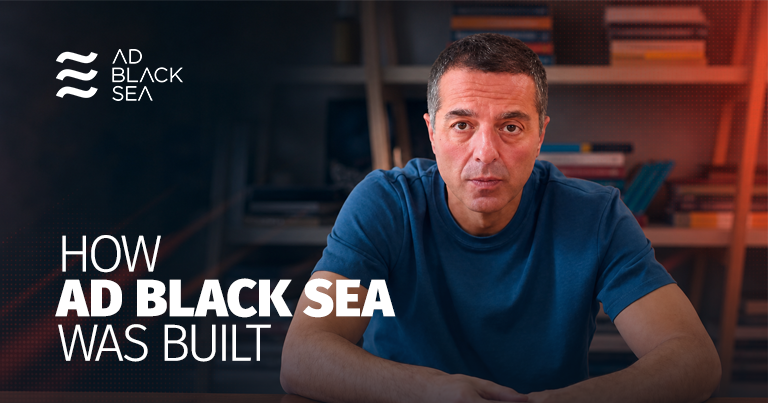
Ahead of the tenth anniversary, festival founder Vato Kavtaradze discusses the journey, the major turning points, and the challenges the industry faces today.
M: When and how did the idea for the festival come about? Did you have any fears, and what were the people around you saying?
I cannot pinpoint a specific day because the idea has been brewing for a long time. When we founded our agency, Windfor’s, we set a goal to put Georgia on the international creative map. Attending festivals gave us so much inspiration that we felt a strong need to create something similar here.
I realized a single agency could not fulfill that mission alone. The entire industry needed to develop. Festivals act as the main gravitational center for the field. That is where standards, the spirit of competition, and the development curve emerge. I hardly recall any pessimism from the people around me, mostly because there was very little of it. Even if there was, we paid zero attention to it. You cannot achieve anything by overthinking risks. The fear of failure might be present every day, but it never dictated my actions. When you know deep down that something is right and needs to be done, all the other voices simply fade away.
M: Why was Batumi chosen as the location?
The Cannes Lions festival serves as the ultimate model for the international creative industry. There is definitely a connection between Batumi and Cannes. The sea, the resort town vibe, and a welcoming environment for guests form the three main pillars of a festival: competition, education, and networking. Doing this in Tbilisi would have been difficult because everyone is already at home there. Traveling to Batumi inherently forces a mindset shift and brings a completely different energy. I should mention, however, that Batumi has limited capacity for hosting an event of this scale, and the festival has been navigating those infrastructural limits for years.
M: Building an international reputation in the early years must have been incredibly difficult. How did you convince the speakers to come?
Michael Conrad, a major figure in the industry and founder of the Berlin School of Creative Leadership, helped us immensely. I attended his school in 2008, and we built a great friendship. When we decided to launch the festival, I asked for his help. He could convince the most authoritative figures with a single phone call. We relied entirely on his reputation during those first few years to bring in professionals who are considered cult icons in the field. When you bring in a high-profile guest and sincerely deliver on your promises, they naturally become global ambassadors for your festival.
M: Over the past 10 years, what was the biggest turning point for the festival?
Probably the year Russia invaded Ukraine. We immediately cut Russia out of our festival circle. Before that, we collaborated with Russian agencies, which served as a major financial source for the event. Severing that tie was financially damaging, but morally, it was the only right decision. During the same period and for the same reasons, we cut ties with our state institutions. When the festival succeeded without those two major resources, we knew for sure we could pull it off entirely with the support of the Georgian industry, our partners, and our friends.
M: How has Ad Black Sea changed the relationship between clients and agencies?
The dynamic between clients and agencies is crucial for the industry. Our goal has always been to strengthen that bond. We even brief the international specialists who speak at the festival specifically on this aspect. In recent years, the number of client representatives at the festival actually surpassed the number of agency attendees. I really dislike it when agencies look down on their clients. The festival helps both sides realize how vital their collaboration is. They get to meet international stars in an informal setting and see how down-to-earth they are. That kind of environment breaks down barriers and makes communication much easier.
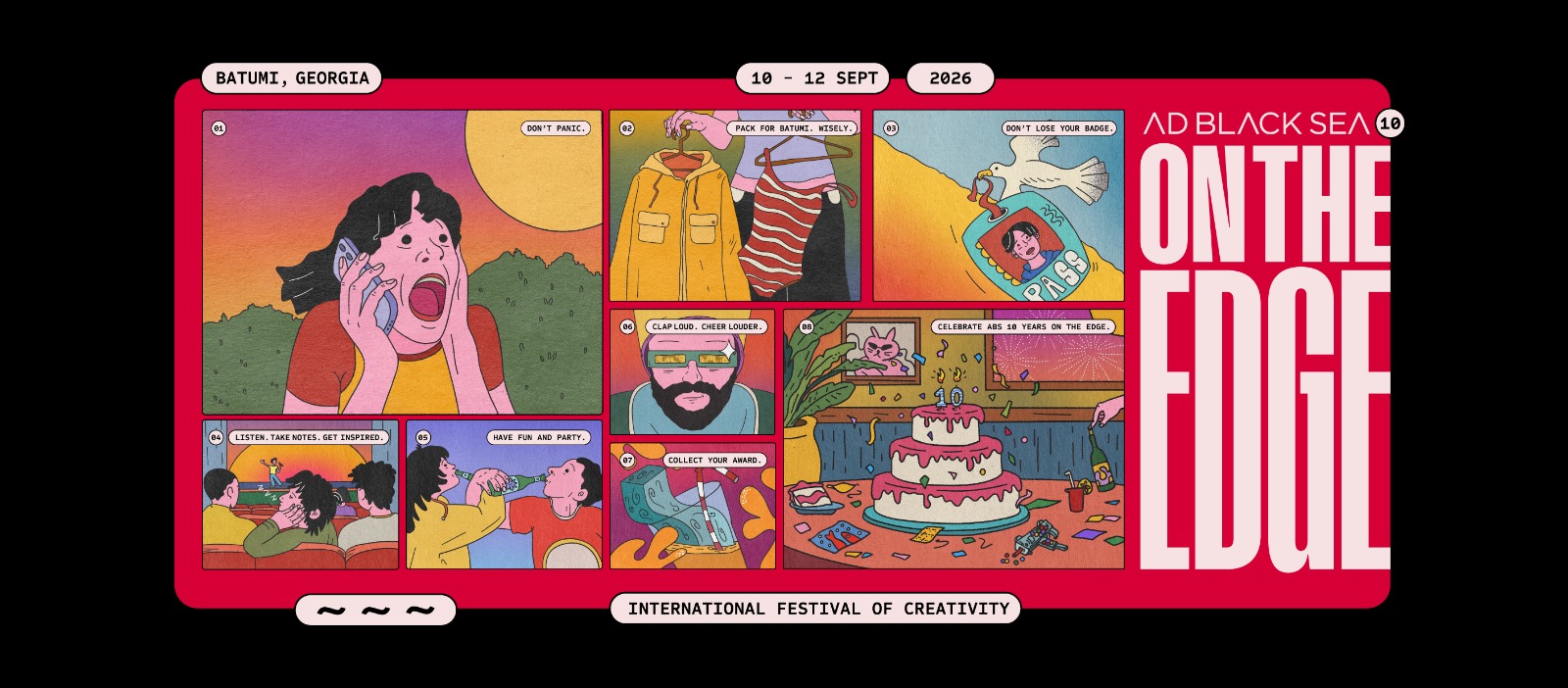
M: You chose “On The Edge” as the theme for the tenth anniversary. What is the concept behind that?
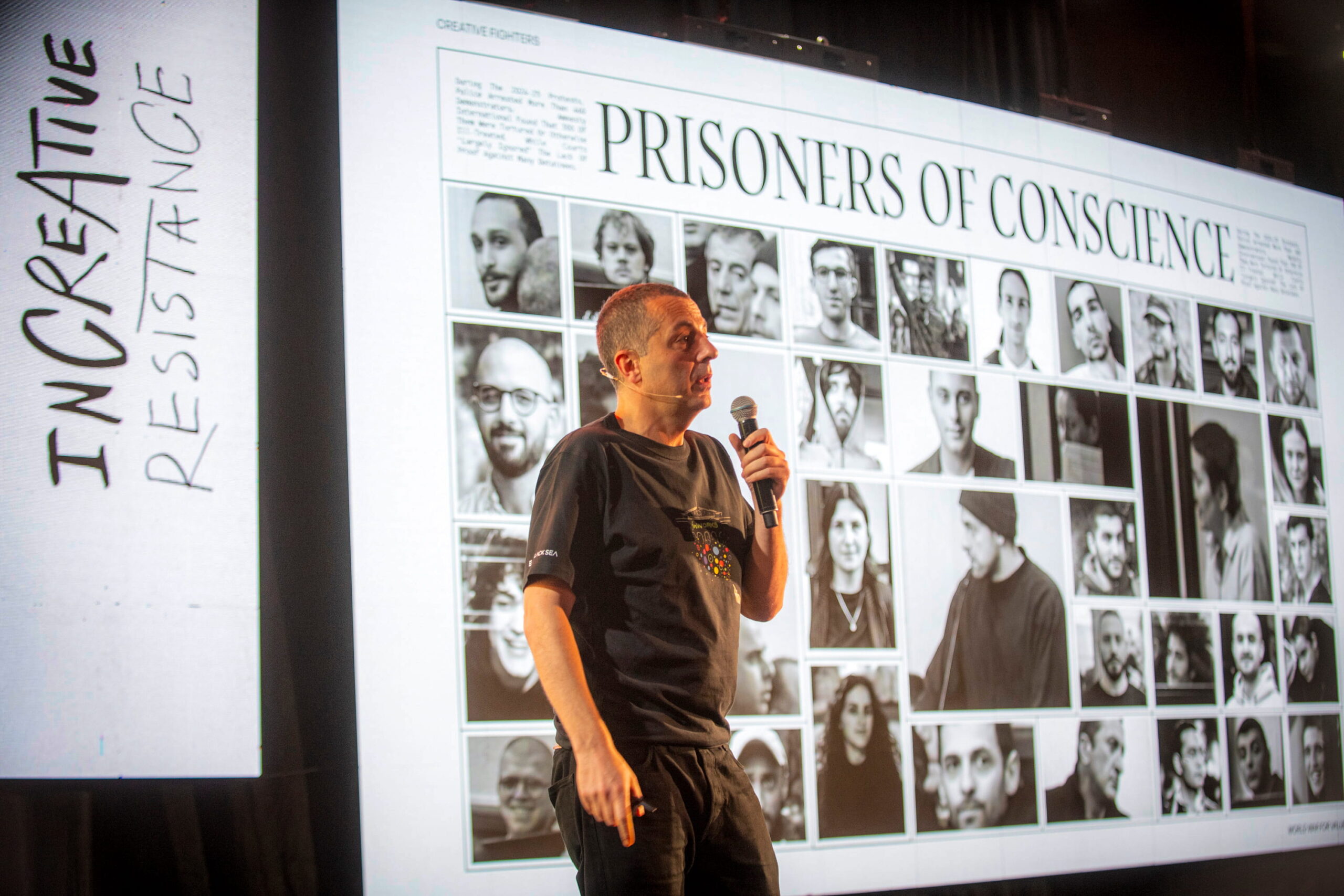
The phrase directly echoes the reality we all live and work in today. The current situation is unimaginable. Think about an environment where, for the third year now, our friend and colleague is in captivity, people are dying in prison, and others are sacrificing their lives in war. In this reality, we are walking on the edge, just trying not to lose our minds.
Globally, authoritarian forces are pushing back against the creative, free world. Any creative act is already a walk on the edge by default. Working in the current climate makes it twice as hard. We are trying to survive and fight off the darkness. For me, this festival is an act of resistance. It is a way to support and stand alongside the people and principles we believe are essential for our survival.
M: What is your main ambition for the next 10 years?
The primary vision for the festival was always for it to become a regionally significant event that everyone knows and respects. Thinking long-term is difficult right now. The industry is in survival mode, and every day is just about making it to the next. The main plan is to maintain our quality and keep creating interesting projects. The rest depends entirely on the direction the world and our country take.