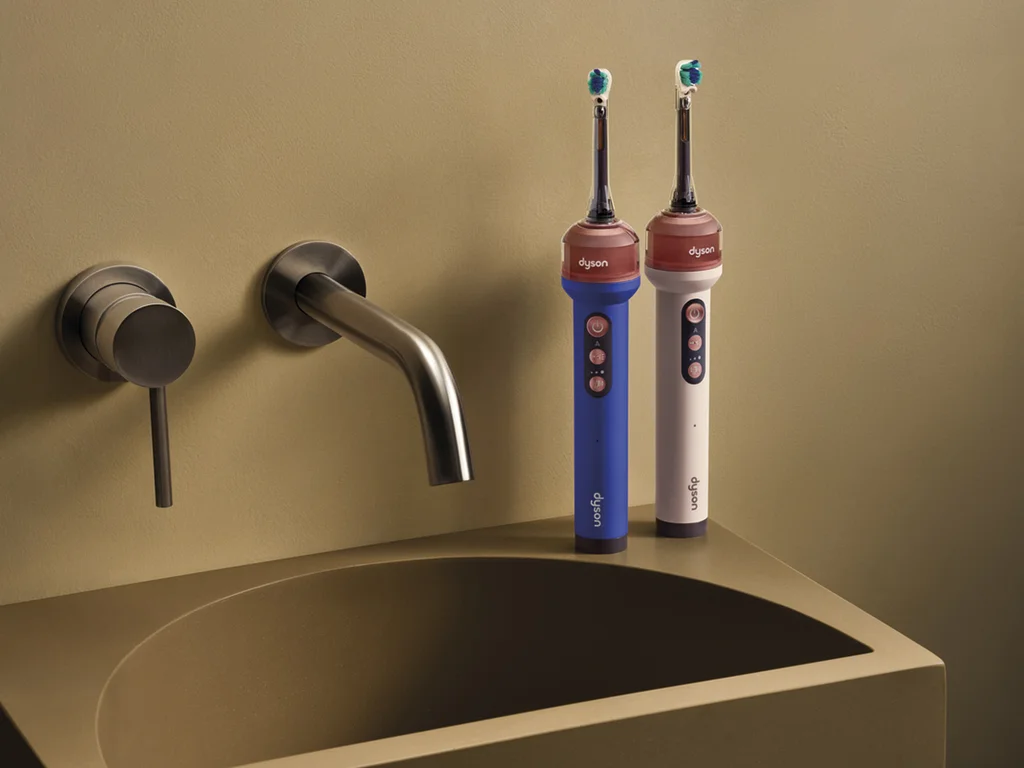
The $499 CameraJet uses computer vision to find the spaces between your teeth and fires microscopic bursts of mouthwash as you brush. Behind the spectacle is a larger Dyson strategy: finding ordinary habits that engineering can make harder to ignore.
For most people, brushing their teeth is among the least technologically ambitious moments of the day. Two minutes, twice a day, usually performed half-awake in front of a bathroom mirror.
Dyson sees room for considerably more machinery.
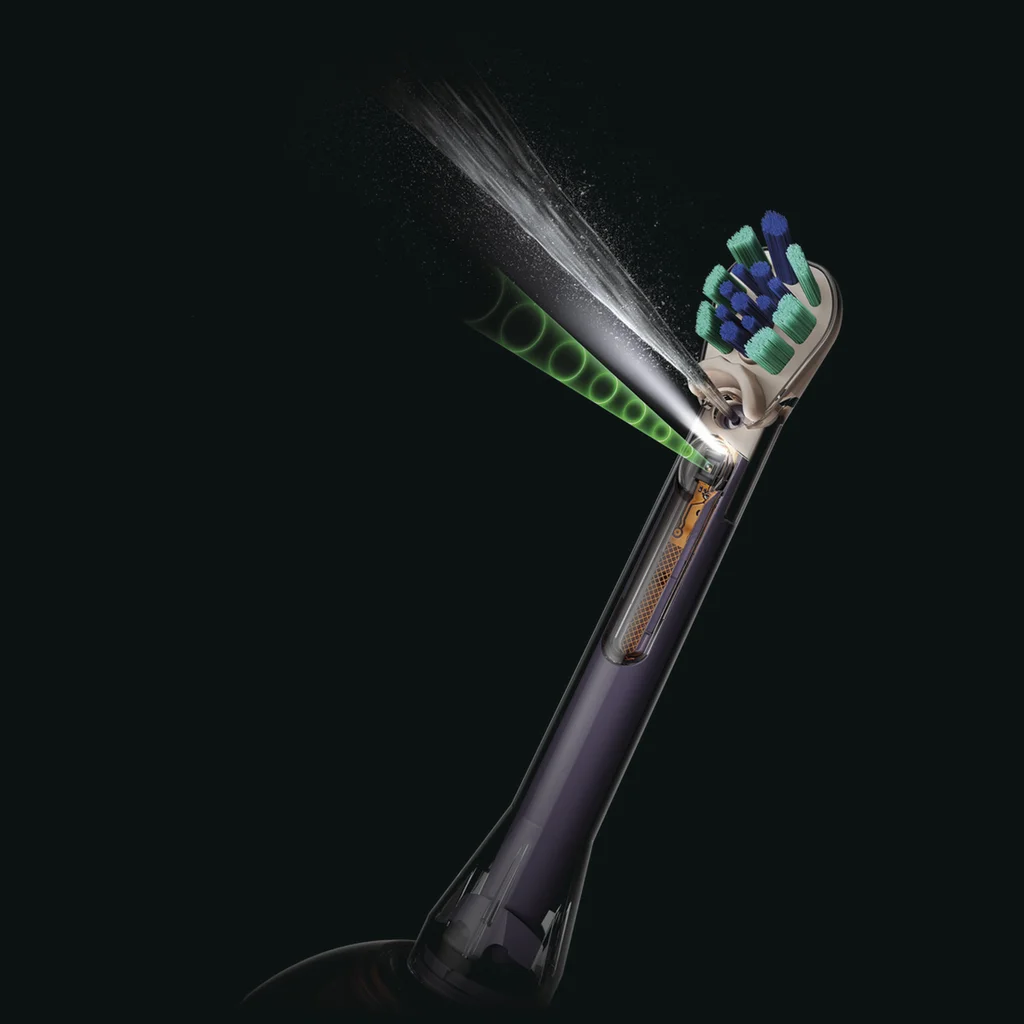
The British engineering company has developed an electric toothbrush called the CameraJet, a $499 device equipped with a miniature camera, computer vision and a precision liquid-jet system designed to clean between teeth while the user brushes. The camera scans the mouth 28 times a second, identifying gaps where plaque tends to accumulate and triggering tiny bursts of mouthwash directly into those spaces.
The intervention is almost invisible to the person holding the brush. There is no separate flossing stage, no countertop reservoir and, crucially, little of the splashing associated with conventional water flossers. The experience is intended to feel much like ordinary brushing.
That apparent simplicity conceals an unusually complicated machine. It also reveals where Dyson increasingly believes its future lies.
The company that built its reputation on bagless vacuum cleaners has spent the past decade moving deeper into personal care, turning engineering-heavy products into luxury objects with mass-market visibility. The Supersonic hair dryer, introduced a decade ago at a price that initially invited skepticism, became a cornerstone of a beauty portfolio that now includes the Airwrap, straighteners and hair-care formulations.
Oral care is the latest test of the same proposition: that consumers will pay a substantial premium when Dyson can make a familiar routine feel technologically unfinished.
The Real Design Problem Was Human Behavior
Development of the CameraJet began with a stubborn fact about dental hygiene: many people simply do not floss regularly.
The American Dental Association recommends cleaning between teeth every day, yet compliance has long been a challenge. For Dyson engineers, that gap between recommendation and behavior became the starting point.
Rather than asking how to improve floss itself, the development team focused on the habit people were already more likely to maintain: brushing.
“We looked at whether you could floss without floss,” – says Niamh Turney, a Dyson engineer who worked on the product for several years.
That question pushed the team toward integration. If cleaning between teeth could happen automatically during brushing, the user would no longer need to adopt an additional behavior, remember another step or reach for another device.
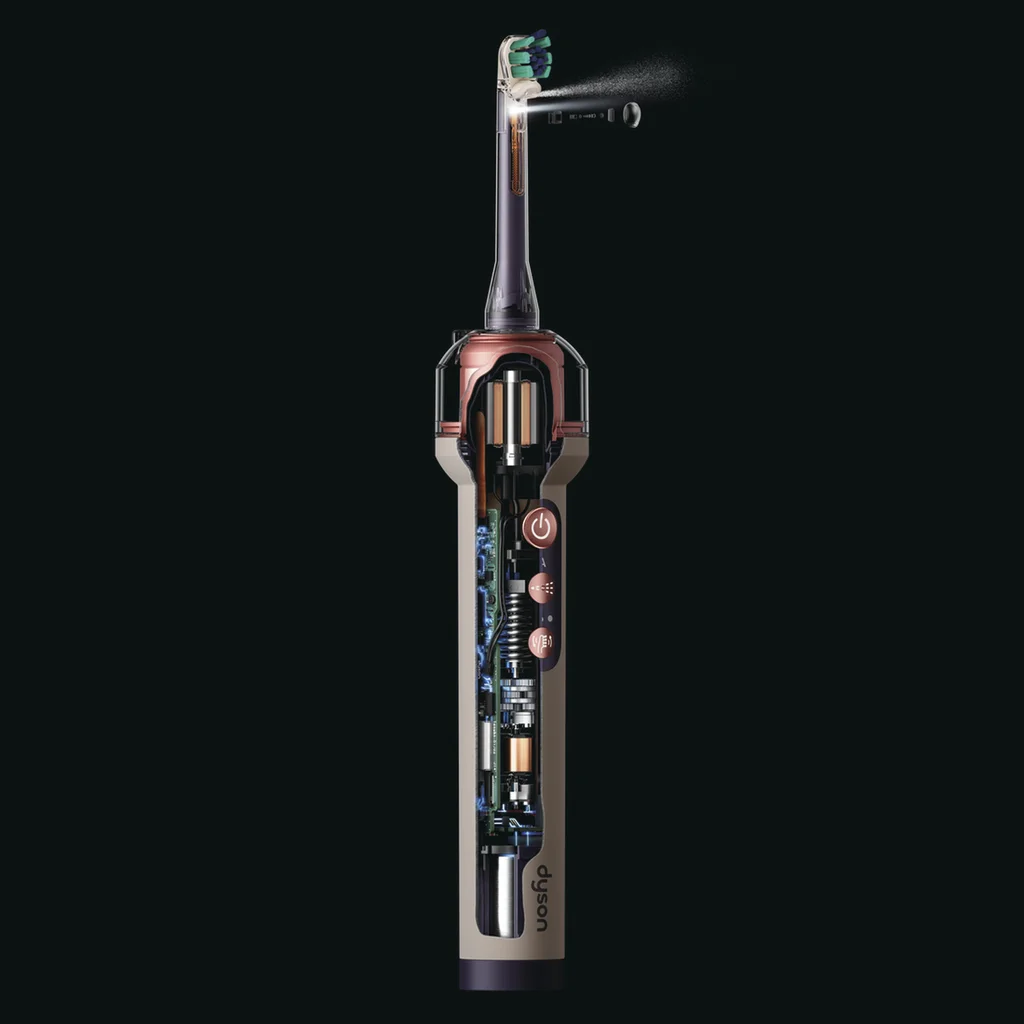
Traditional water flossers can send a continuous stream of liquid between teeth, though they generally require a reservoir large enough to sit on a bathroom counter. A handheld toothbrush offers no such luxury. Dyson’s internal tank holds just 12.5 milliliters of mouthwash, meaning the device cannot afford to spray indiscriminately.
Its solution was to give the toothbrush vision.
A miniature camera continuously observes the teeth as the brush moves through the mouth. A computer-vision system, trained using nearly half a million dental images, recognizes interdental gaps in real time. When it detects one, the brush releases a tightly controlled jet of liquid.
The result is an unusually literal form of targeted cleaning: the toothbrush decides where the fluid is needed and uses it only there.
“It happens so quickly,” Turney says. “It immediately triggers the jet while you’re brushing.”
That efficiency is what allows Dyson to shrink a water-flossing system into a handheld product without requiring the kind of reservoir normally associated with the category.
Dyson Engineered the Plaque, Too
Dyson also reconsidered the mechanics of the brush head itself. Conventional sonic toothbrushes can lose effective bristle movement as users press the brush against the surface of their teeth. Dyson’s design adjusts the angle of oscillation in an effort to keep the bristles moving effectively under pressure.
Working with researchers at the National University of Singapore, Dyson developed synthetic plaque designed to behave like the real material found on teeth. Engineers then worked through hundreds of combinations of brush heads, jet patterns and cleaning configurations, evaluating how effectively each removed the artificial buildup.
The process sounds closer to laboratory product development than the typical image of toothbrush design, which is precisely the point.
Dyson has spent years cultivating an identity around excessive engineering applied to ordinary objects. Airflow became the foundation for vacuums, hand dryers and hair tools. Motors became smaller, faster and more valuable when attached to products consumers previously regarded as commodities.
With CameraJet, the relevant technologies are imaging, fluid dynamics and automation.
From Vacuum Company to Premium Technology Brand
For years, each Dyson expansion carried a version of the same question: Why is a vacuum cleaner company making this?
That question has become less useful as Dyson’s portfolio has expanded.
The privately held company generated $8.3 billion in revenue in 2025 and invested more than $540 million in research and development, while introducing a record number of products. Personal care has become a significant part of its identity, aided by devices whose price tags place them closer to premium electronics than conventional grooming tools.
A several-hundred-dollar hair dryer once sounded extravagant. Dyson managed to turn the category into a technology purchase, with performance claims, recognizable industrial design and enough status value to sustain premium pricing. Competitors followed, and high-end hair tools became a far more credible category than they had been before Dyson entered it.
CameraJet follows that playbook, though oral care presents a different challenge.
Hair styling is visible. It carries fashion, identity and social value. Flossing has none of that glamour. Its rewards are preventive, largely invisible and often understood in the abstract.
At $499, CameraJet asks consumers to treat a toothbrush more like a premium tech device than a bathroom basic. Dyson is betting that convenience, automation and better compliance with flossing will justify the price, while replacement heads and its low-foaming mouthwash could create recurring revenue beyond the initial sale. The broader opportunity is familiar territory for Dyson: enter a mature category, identify an inconvenience consumers have learned to tolerate, and raise expectations through engineering.
If CameraJet succeeds, it could reshape what buyers expect from premium oral care – and force competitors to rethink what a toothbrush should actually do.