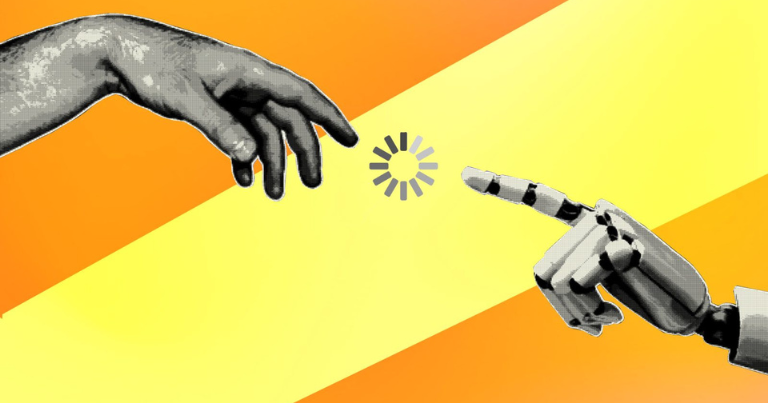
The problem with infinite ideas is that someone still has to choose one.
Generative AI has made that problem much more visible inside creative teams. A campaign can now produce dozens of visual directions, hundreds of copy variations and countless executions before anyone has had time to decide which idea is actually worth pursuing. The cost of generating options has collapsed. The value of choosing well has not.
That tension runs through Brand Perspectives 2026, a report from creative production company MikeTeevee based on conversations with senior in-house creative and marketing leaders from brands including HelloFresh, Wayfair, DoorDash, Canva, Intuit, O2, Verizon and Rivian. Their experience suggests that AI is accelerating creative production while exposing weaknesses that were already present: too much work, uncertain standards, disappearing junior opportunities and teams that have become less comfortable making decisive creative choices.
Creative departments have always produced far more ideas than audiences ever see. The difference was that time and production costs created a natural filter. A team might explore twenty routes, reject nineteen and commit serious resources to the remaining one. AI weakens that filter because producing the twenty-first, fiftieth or hundredth option costs almost nothing.
James Hurst, executive creative director at HelloFresh, describes teams facing genuine decision paralysis as the number of available variations approaches infinity. Wayfair creative leader Mike Pearson raises a related concern: when everyone uses similar tools, references and inputs to create more work, avoiding sameness becomes increasingly difficult.
The risk is easy to recognize in contemporary creative work. More polished assets are appearing faster, yet the abundance can make individual pieces feel strangely interchangeable. AI can produce a competent image, line or storyboard almost immediately, which makes competence itself less distinctive. The harder skills move upstream: deciding which idea deserves attention, identifying what feels generic and having enough conviction to stop generating alternatives.
That last part may be particularly important. Hurst argues that some creatives have become less confident in defending their own judgment. Research processes, audience testing and endless rounds of feedback can produce technically validated work while leaving the person responsible for it unconvinced. AI adds even more possibilities to that environment. When another variation is always available, committing to one direction becomes psychologically harder.
It also complicates expertise. Generative tools allow people with limited craft experience to produce work that looks surprisingly accomplished. That democratization has real value, but it can create uncomfortable conversations when an experienced designer sees fundamental weaknesses in something that a less experienced colleague considers excellent because the output exceeds anything they previously could have made themselves.
The answer cannot be to restrict who gets to create. The more useful challenge is maintaining standards as access expands. If execution becomes easier, creative judgment has to become sharper.
The talent pipeline makes that challenge more urgent. AI is increasingly capable of handling work that traditionally helped junior employees enter creative industries: resizing assets, producing variations, building decks, adapting copy and executing straightforward briefs. Removing those tasks can look efficient in the short term. Ten years later, the industry may discover that it also removed the training ground where senior talent used to develop.
Verizon executive creative director Jason McKean puts the problem simply: if entry-level roles disappear, where will future mid-level talent come from once today’s senior leaders move on?
Junior creatives have historically learned through repetition, feedback, mistakes and proximity to more experienced people. A first job rarely consisted entirely of brilliant conceptual work. Much of the value came from doing ordinary tasks while gradually understanding why experienced creatives made particular decisions. If AI absorbs the ordinary work, companies need another way to provide that experience.
Some leaders argue that junior roles should evolve rather than disappear. AI fluency can become another part of craft, alongside typography, writing, art direction or production knowledge. Curiosity may matter more than mastery of any individual platform, particularly when the tools themselves change every few months.
There is another paradox running through the AI productivity story. Companies keep describing AI as an efficiency tool, yet many creative teams do not feel that their working lives are becoming quieter. Intuit CMO Thomas Ranese observes that people are talking about efficiency while simultaneously working harder than before.
The explanation may be familiar to anyone who has experienced previous productivity technologies. When production becomes faster, expectations expand. If a team can make ten versions in the time it once took to create two, the organization often asks for ten rather than reclaiming the saved time. Efficiency becomes higher output instead of fewer hours.
Meanwhile, some of the genuinely tedious parts of creative work remain stubbornly manual. Canva’s global head of advertising and creative operations, Ted Markovic, points to a striking mismatch between sophisticated AI capabilities and workflows that still depend on spreadsheets and repetitive handoffs. The technology may have advanced faster than the organizations using it.
There are more encouraging examples. DoorDash has used AI to prototype ideas rapidly enough that teams can test pacing and messaging with audiences rather than presenting static scripts on slides. The company reports a 20% improvement in creative velocity as time spent on decks and other labor-intensive tasks has fallen. In cases like this, speed has a clear purpose: getting closer to the idea sooner.
That distinction may determine which teams benefit most from AI. Using it to remove administration, create prototypes or explore unfamiliar territory can give people more time for judgment. Using it simply to multiply output can create additional noise for the same people to filter.
The central creative challenge of the AI era may therefore be surprisingly old-fashioned. Teams still need taste. They still need people willing to say that one idea is stronger than another and explain why. They still need juniors who can learn how those decisions are made, seniors who can defend them and organizations willing to stop exploring once they have found something worth making.
AI has made creating more options remarkably easy.
Knowing which one to believe in may become the harder skill.