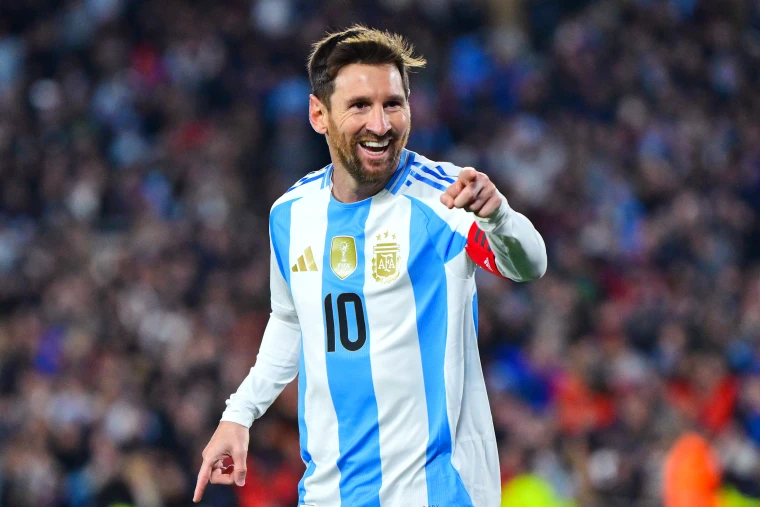
Lionel Messi has retired from international football, ending an Argentina career that made him the country’s all time leader in appearances (207) and goals (125), with a World Cup and two Copa America titles.
Confirming the decision on Monday, the forward said it “hurts deep in my soul”, but that he “realises the time has come.” The announcement closes a chapter that effectively ended in July, when Argentina lost the World Cup final to Spain 1-0 in extra time. The South American champions managed only two shots across 120 minutes, one of them Messi’s, before Ferran Torres scored the winner in the 106th minute.
Messi had written the retirement letter on July 21, two days after that defeat, but held it back for weeks. He made it public only after the death of his father, Jorge, who died on August 8 at 68 and had also managed his son’s career. Earlier this month, Messi said the loss had left him uncertain whether he could keep playing “much longer.”
The 2026 tournament was Messi’s sixth World Cup, tying Cristiano Ronaldo for the most ever played by a men’s field player, and made him only the third player, after Brazil’s Cafu, to appear in three World Cup finals. He finished the competition with eight goals and four assists, second in the Golden Boot race behind France’s Kylian Mbappe, and won the Silver Ball behind Golden Ball winner Rodri. For a few days, he even held the record for most goals scored in World Cup history, overtaking Miroslav Klose’s 16 with a strike against Austria, before Mbappe’s brace in the third-place play-off pushed the Frenchman ahead.
The retirement marks a real generational shift for Argentina, whose title-winning core is aging out together. Messi pointed to that himself in his letter, saying the younger players coming through deserve their turn in the shirt. What it does not touch is his club career: he remains under contract with Inter Miami through two more seasons and will return for his fourth year there after joining from Paris Saint-Germain in 2023. In 2024, Messi had said he would keep playing until he could “no longer perform, or no longer enjoy the game, or not able to help my teammates.” That moment, for Argentina at least, has now arrived.